You Won’t Believe What They Do To Newborn Puppies To Turn Them Into Service Dogs
Post Author:
heelingassistants
Categories:
Date Posted:
January 23, 2026
Share This:
They called it the “Super Dog” Program.
The American Military were investigating how to raise stronger, more resilient, smarter dogs. They turned to Dr. Michael Fox, who had written the book (indeed, several books) on puppyhood brain development.
Their the protocol they developed is now used by many service dog schools and dog breeders, and it starts within 24 hours of the dogs being born.
Let’s talk about resilience.
Why is it that some people can go through rough times and seem to bounce back, while others suffer PTSD or are emotionally debilitated for chronic lengths of time?
Why is it that when some people get cut off by a bad driver, they scream and start swearing, while others just say “oookay, then.”?
The full answer to these questions is complicated and involves a complex interaction of genetics and early childhood environment. But one part of that answer involves the amount of stress we experienced as babies.
You probably already know that neglect or abuse in childhood negatively affects the brain’s development. And you probably already know that love and attention positively affects the brain’s development.
But did you know that there is a Goldilocks zone of distress that results in the most resilient emotional regulatory systems and most complex brain connections?
Too Much Or Not Enough
It turns out that neglect and stress can permanently wire the body to react dramatically to stress. The baby learns that the world is dangerous and action must be taken.
But if a baby never experiences distress or challenges, then their body doesn’t learn how to bounce back from stress. One small thing can disrupt their lives, and their bodies don’t know how to spring back.
If we think of our ability to rebound from stress as an elastic band, too much early distress snaps the band entirely, but not enough leaves it stiff and brittle and also liable to snap as it ages.
Brief, mild stressors early in life were found to have a positive effect – the body learns to react proportionately to changes in the environment, but doesn’t panic because it is also used to things returning to normal quickly.
The US Military applied this knowledge to dogs.
Early Neurological Stimulation
In 1966, Fox and Stelzner published a paper called Behavioural effects of differential early experience in the dog. This study looked at three groups of 8 puppies, raised them differently, then compared them.
The handled/stimulated group of puppies were given a wide variety of experiences on a daily basis.
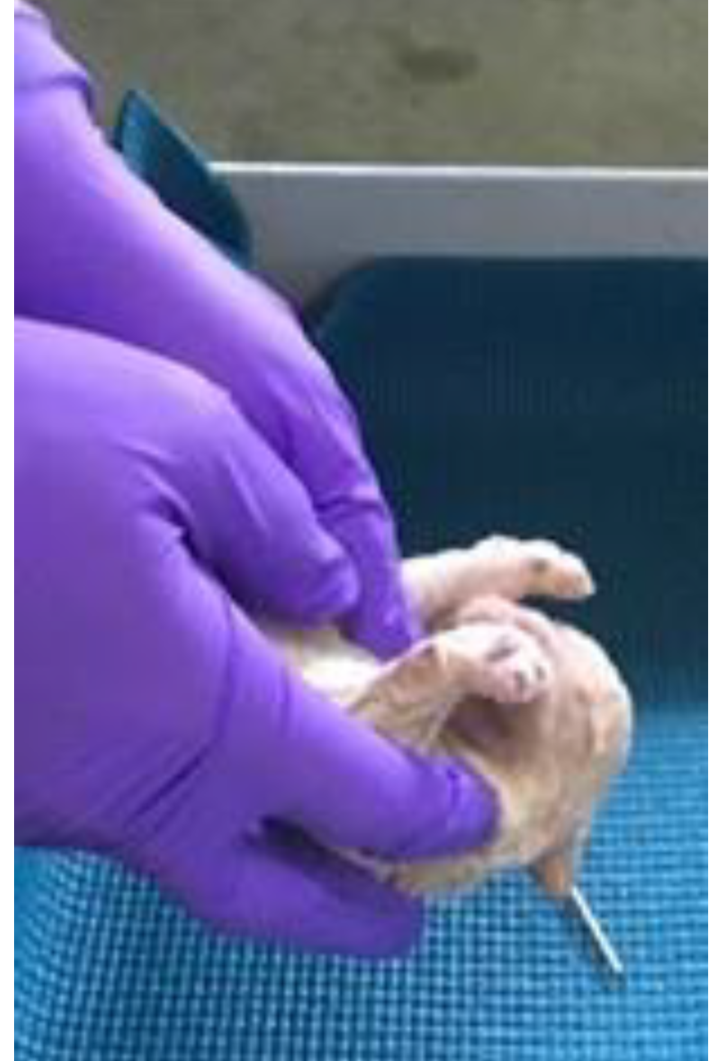
Every day from birth until 5 weeks of age, each puppy received a daily program of handling and sensory stimulation. They got 10 minutes being shown blinking lights, 10 minutes of tilted upside down then right side up slowly to stimulate their sense of balance, and even a few minutes of paddling in a warm bath from 2 weeks onward. They were brushed and played with. Then they were returned to their mother.
The study found that puppies who were handled this way had greater amplitude of their brain waves, indicating better brain maturity. They had more variable heart rates, explored new places more boldly, and were more attached to humans than puppies who had just been handled for weighing and cleaning.
Their brains even had different levels of neurotransmitters.
Using this as a jumping off point, the military instituted a regular – but less extreme – handling regimen for their program, and a variation of this program, Early Neurological Stimulation, or “ENS” has spread through the dog world and is now practiced formally by service dog schools and many breeders.
Standard procedure involves tilting the puppy upside down gently, placing the puppy on a wet cloth, and tickling their toes with a q-tip, among other things.
Recent studies have found the effects of this particular protocol to be less dramatic than Dr Fox’s 1966 study, but at least it is a jumping off point. The magic is not in the q-tip or the wet cloth – it’s in the daily increase and variety of handling.
Now that the importance of frequent handling of puppies is known, almost all responsible breeders make a point of handling the puppies daily and providing enrichment opportunities. Only puppy mills leave the mother dogs and pups completely undisturbed and unstimulated.
However, the average backyard breeder tends to think that providing a warm and safe place in the kitchen, and weighing and cleaning the puppies, is enough. It is not!
Whether their toes are tickled by a Q-tip or not seems less important than ensuring that each pup is briefly and routinely separated from mother and siblings, handled lovingly, played with, groomed, and then returned to the nest.
You can bounce the puppy like a baby, or pat it, or play “this little piggie”. Many breeders and trainers have developed their own protocols. My personal favourite is Suzanne Clothiers’ Enriched Puppy Protocol, which is so dramatic in its effects that it led to one service dog school doing a total overhaul of their breeding facilities.
But there are others, also.
What you do isn’t as important as the quality stimulation itself: Not too much, not too little. Just the right amount.
As the puppies begin to grow and change, stimulation becomes socialization and enrichment. The difference between stimulated and enriched puppies versus unstimulated puppies becomes evident later on in life.
Most Puppies Aren’t Getting Enough
You can often spot it, if you know what to look for:
- The puppy who goes from zero to sixty, either in excitement or fear or aggression, and doesn’t know how to settle down afterward.
- The puppy that doesn’t seem to know what grass is, and can’t seem to process things seen at a distance greater than ten or fifteen feet.
- The puppy who reacts to a collar and leash as though they are brand new experiences.
These are all puppies that could have been raised neglectfully… or simply without enough stimulation in their early lives. Their puppyhoods may have been too hard or too easy.
Mother dogs stop helping their puppies find their way back into the nest around Day 5. But sometimes well-meaning breeders will swoop right in to help the puppy back, without giving them the time to try and find their way themselves. That’s an opportunity for crawling practice that they were denied.
The puppies may have been kept indoors, fiercely protected from stray germs… and now they have a compromised immune system. They may have been kept beautifully warm… and now they don’t know how to handle a draft.
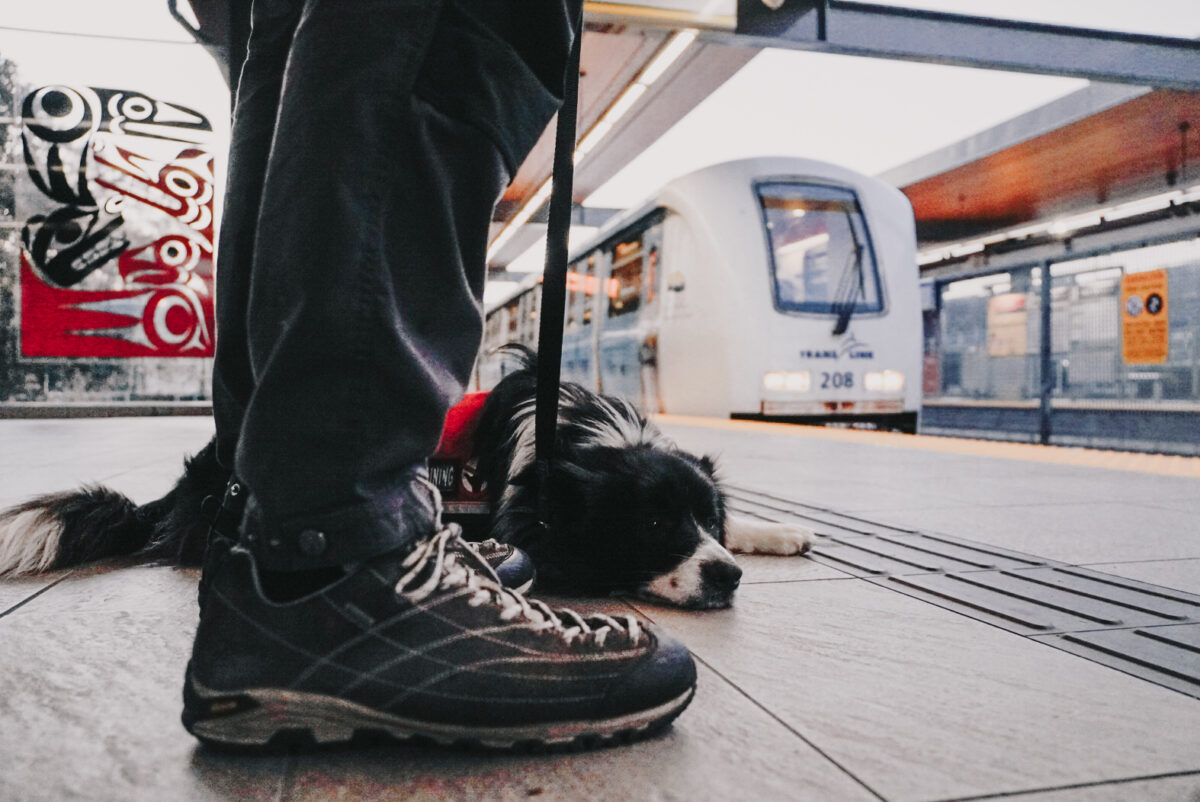
Service Dogs Need To Be Resilient
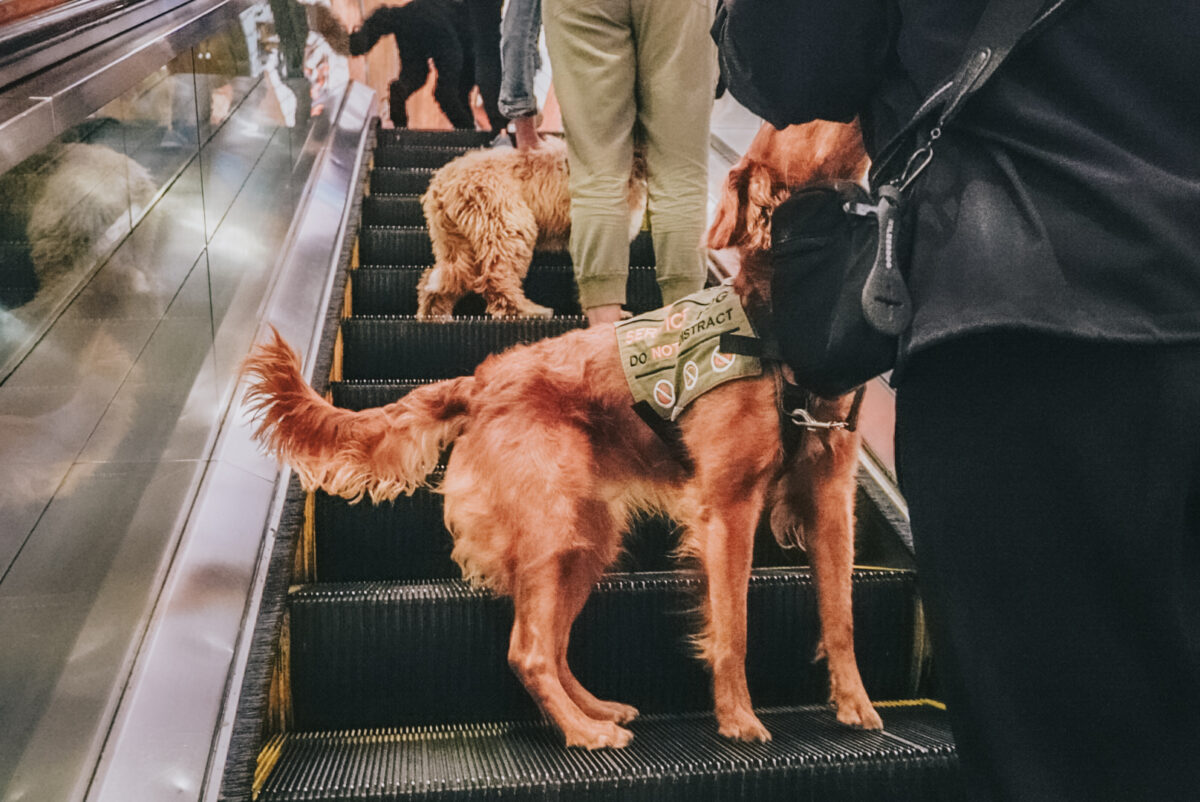
A good service dog shrugs off life’s little stressors. “Poop happens. Let’s check it out!” seems to be their motto.
If a child falls on a balloon, it may be a little scary, but it is soon forgotten.
If a wheelchair rolls over their toe and breaks it, no big deal – “I’ve got lots of toes, boss, don’t worry, I’ll be fine!”
If a spider leaps out of a box in a Halloween Decor store, the dog might be startled but then checks it out.
These dogs know that strange little blips happen in life, but feel confident that everything will return to normal momentarily.
That’s why many service dog schools are still doing that old ENS protocol. It isn’t the only way to provide just the right amount of stimulation (again, I highly recommend the Enriched Puppy Protocol of Suzanne Clothier) and the originator of it, Dr. Michael Fox, seems a little bemused by its staying-power. He has long since moved on to other topics in animal welfare.
But the ENS protocol is a well-known and popular way to stimulate effectively without traumatizing the puppies, and which is absolutely key.
So, when you’re looking for your future service dog puppy, ask the breeder… “do you ever hold the puppies upside down?”
Share This Article

recent posts
We Are Now A Registered Non-Profit!
Heeling Assistants Canada has a goal of providing accessible, affordable assistance to those who want to owner-trainer their own service dogs.

 LGBTQIA2S+ Safe