

Not all of our clients have disabilities. Some are professionals who work with vulnerable, traumatized, or disabled populations.
If you are a therapist, counsellor, Psychologist, Psychiatrist, social worker, educator, first responder, or other kind of professional, you may be looking to raise your own facility dog.
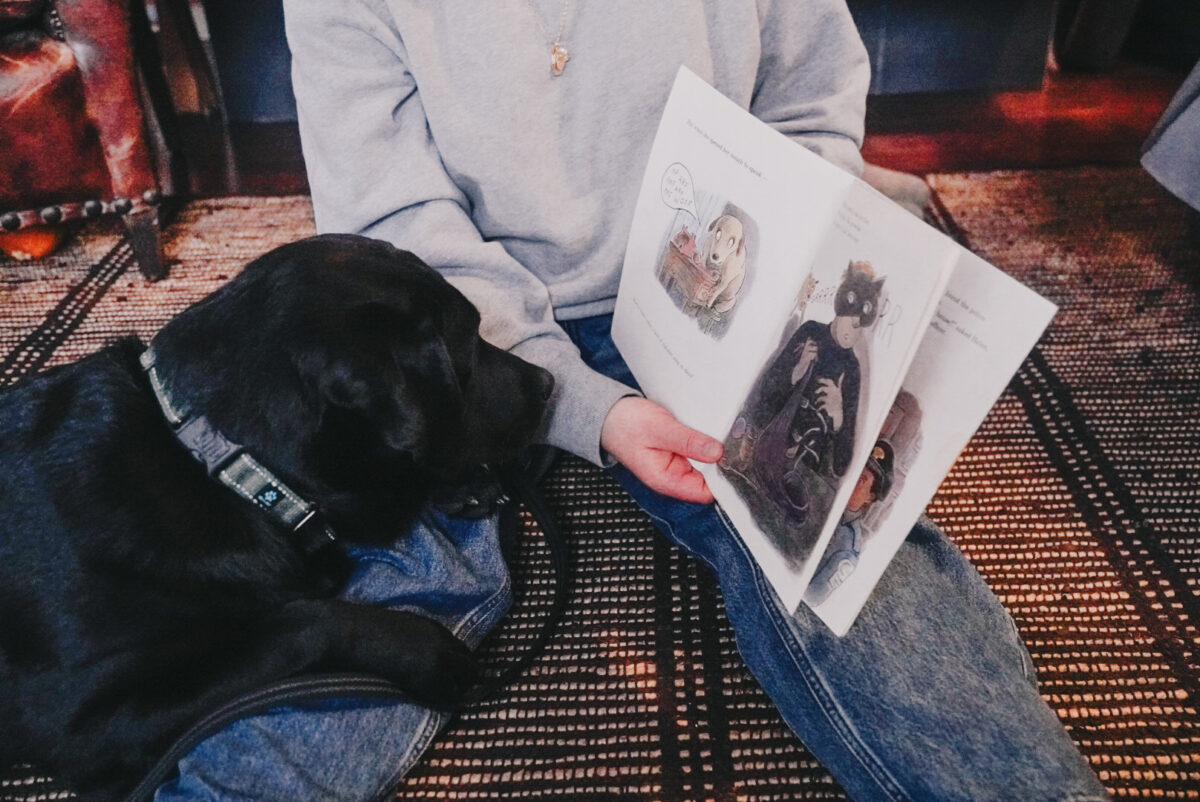
Facility dogs may offer comfort to traumatized children, or may help them learn to read. They may snuggle with patients in therapy, or they may provide occupational therapy exercises for those with physical limitations.
We welcome professionals looking to raise and train their own facility dog.
From Puppyhood to Accreditation
Facility dog work is challenging and isn’t for every dog. We can help you find and select your future facility dog, and then raise them to their maximum potential.
Our intensive socialization classes and training programs will set your pup up for success.
Our accreditation program requires extensive temperament testing, and a high level of public manners and skill training.
Our puppy programs, remedial programs, and accreditation programs are individualized to you and your goals. We offer lessons via group and one-on-one training.
What’s The Difference Between A Facility Dog And An Assistance Dog?
Facility Dogs and Assistance Dogs are both types of service dog. Both of them provide an important service to people who need them. However, their jobs and their access rights are quite different.
Facility Dogs…
Assistance Dogs…
Why Get Accreditation For Facility Dogs?
While Accreditation doesn’t mean as much from a legal standpoint for a Facility Dog as an Assistance Dog, it can make all the difference to your place of work.
An accreditation from a respected organization can reassure employers, landlords, clients, and parents of clients that your dog is well-trained, has a safe temperament, and will not be a liability. It may also help you with your insurance.
While any dog may bite under extreme provocation, we ensure that the dogs we accredit are guaranteed to be sane and safe under normal and even highly stressful conditions, and have been trained to perform real jobs.
They are not simply well behaved pets. They are working professionals.

 LGBTQIA2S+ Safe