
People often believe that service dog training starts after age one.
They’re wrong.
The mistake comes from common knowledge – the average person knows that service dog puppies are raised by volunteer families, who turn in the dog to be professionally trained once they are grown up.
It follows, therefore, to think that service dog training doesn’t start until the dog is already an adult.
But this is a grave misunderstanding of how service dog schools operate, and every year we meet people who missed their chance to train their dog as a service dog by waiting until their dog was already grown.

It is true that most service dog schools ask volunteers to take a puppy home and raise it through adolescence. Then, when the dog is 1-2 years old, the dog begins training with an advanced trainer who is an employee of the charity.
But it is a mistake to think that volunteer puppy raisers are not training the pups. They are – and they work hard.
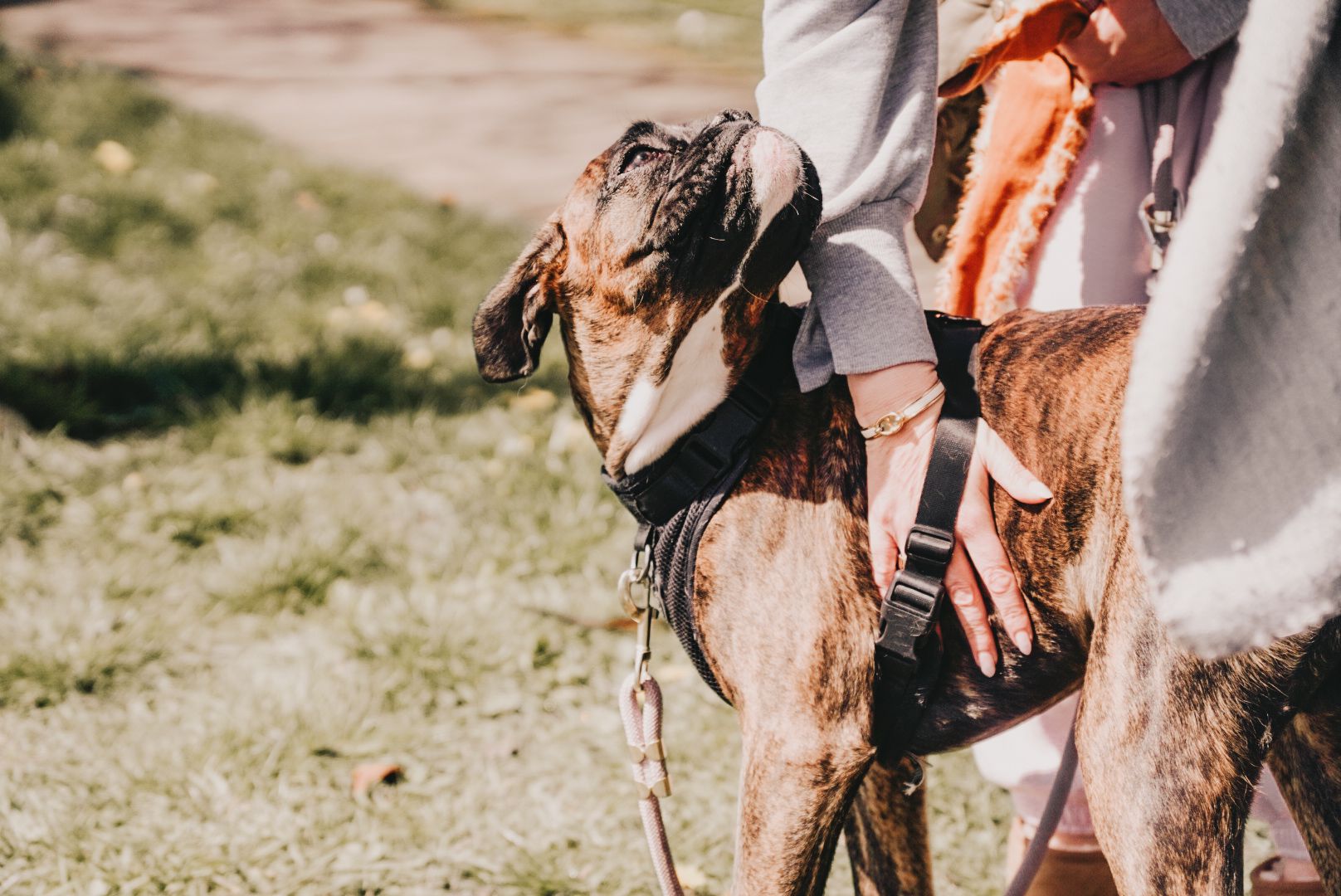
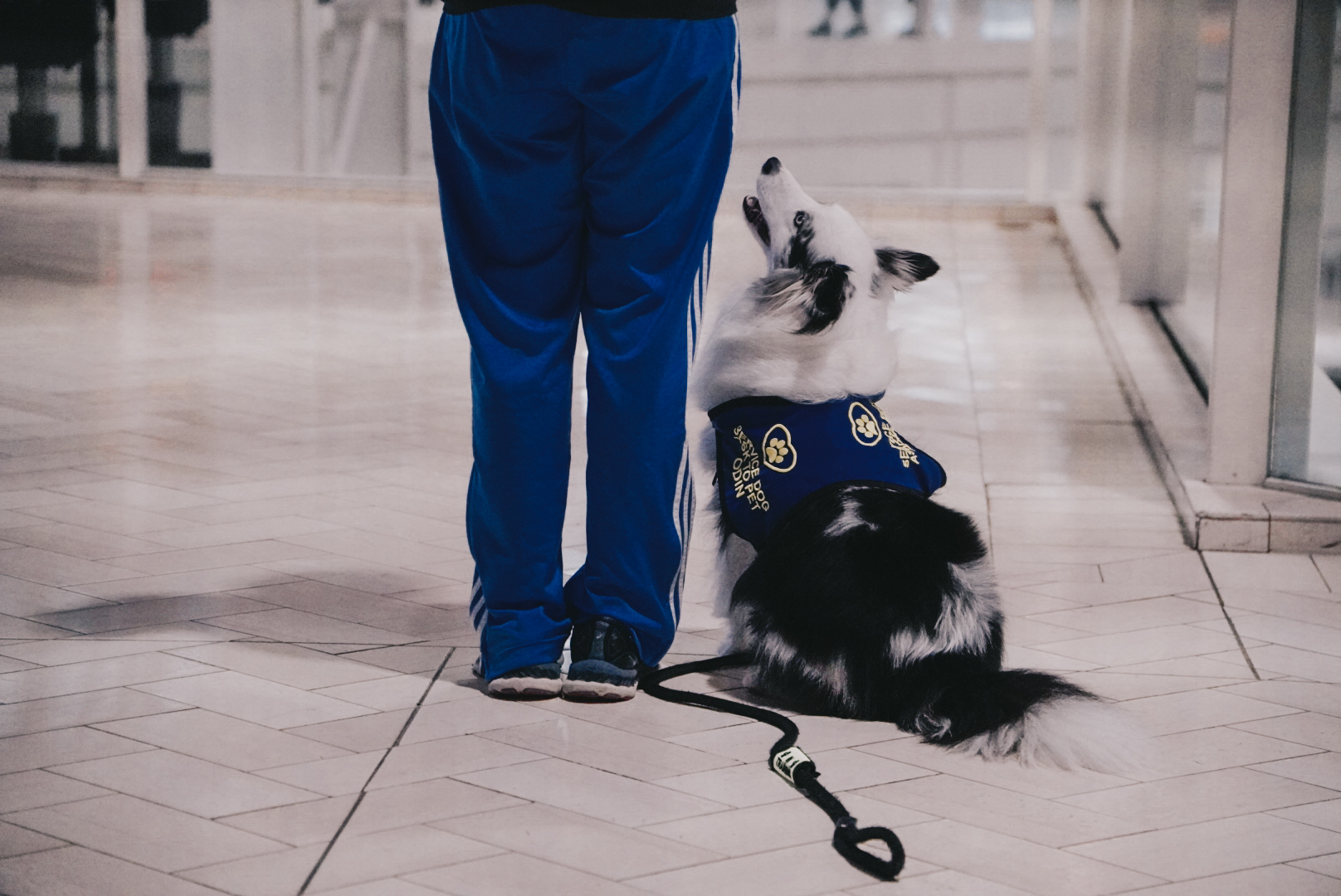
Puppy raisers must take their puppies absolutely everywhere with them. They aren’t allowed to leave the puppy alone for more than a few hours. They must teach the puppy how to walk in a heel position on a leash, how to go through doorways, how to walk past other dogs, and how to behave in a grocery store.
Public behaviour is learned in the puppy’s first year of life.
It has to be.
No matter how skilled the dog trainer is, we simply cannot teach a dog to guide them through a grocery store, or monitor their heart rate, or sniff for allergens, or press elevator buttons if the dog is stressed, scared, highly excited, or otherwise emotional.
No one can focus on their job when they are highly emotional.
So the first year of a service dog’s life must teach them how to be relaxed, chill, and focused even in grocery stores, airports, doctor’s offices, playgrounds, and anywhere else a service dog might go.
The sooner this starts, the better.
Much of a puppy’s first few months of life is dedicated to building a brain that can handle the puppy’s world. From that initial world-building framework come all the other things a dog can learn in a lifetime.
Just as human children absorb languages like sponges while adults struggle to maintain their streaks on Duolingo and still end up with thick accents, puppies are born to absorb and adapt to the world they live in.
If we are thrown into a new world as adults – a strange country, Metrotown Shopping Centre, whatever, and we aren’t prepared for that it can be highly stressful and take a long time to adapt, if we ever adapt at all.
It takes more than just a year. It can take two years, three, maybe longer.
Service dog schools know this, and they don’t waste time. Time is donor dollars to a charity. So before they even start teaching the dog the job, they first need to already know how well the dog does in the public eye.
Waiting Wastes Time

On average, our clients who start raising their puppies for service dog work know one way or another by the time the dog is one whether their dog is likely to succeed or not.
If a puppy raised to this kind of a world still can’t hack it, then it just isn’t going to happen and it isn’t fair to keep asking it of them. On the other hand, if the dog has handled it like a champ, all we need to do is teach them their job and they will be ready to certify as soon as they leave adolescence.
So service dog schools assess the dogs when they are turned in for advanced training. They ask themselves, “does this dog, who was born and raised going everywhere with their special person, enjoy that lifestyle? Can they snooze in malls and McDonalds?” and if the answer is “no”, they don’t even bother teaching the dog. They don’t waste staff time.
But if a dog wasn’t raised for life in the public eye, they absolutely will be excited or skittish or stressed the first time they go to the mall, and that doesn’t tell us anything useful.
We will have to spend that year – sometimes even two or three – teaching them how to feel calm and relaxed in public spaces while also trying to gauge if they ever will.
If the dog does adapt, and is able to do their job in busy places, they may be four or five by the time they are ready to graduate – just a few years short of retirement at ten years of age.
Dogs who are raised well from infancy work with us for an average of two years.
Dogs who start learning in adolescence or later often work with us for three or even four years.
We don’t even accept dogs older than five as a rule, because by the time we’re done the remedial puppy stuff and then also teach them the grown up stuff, they’ll be close to retirement anyway.
All of this assumes the dog is even suited for the job.
Nature and Nurture Go Together
We are all born with personalities.
So are dogs.
The way our brains process information such as sound, light, and scent are set very early in development. For puppies it is mostly set by the time they come home with their new families.
If a puppy is sound sensitive to begin with, no amount of pleasant visits to the grocery store will make the noise enjoyable for them.
If a puppy hates being grabbed by strangers to begin with, often there’s nothing we can do about it.
And if a dog is really born to do their job, then they can learn to do it, even if they don’t start as early as they could have.
BUT…
Most dogs fall somewhere in between. A dog may be a little sound sensitive, but with the right socialization may grow up accepting of the normal noises of life in the city. That same dog, if raised away from all that, will not be able to adapt later on.
A dog may be a little startled by unexpected handling. But a puppyhood of respectful treatment from the public, reward and praise for recovering quickly when startled, and encouragement from their special person can help them overcome this.
It is these edge cases – these average dogs – that are failed when their owner chooses to wait before beginning training.
If your puppy is born with a 50% chance of being suited to working as a service dog, the right puppyhood can push that chance to 75%, while the wrong one can take it down to 25%.
So why wait?
There’s no downside to raising your puppy to feel safe and comfortable in many different places.
There’s no downside to teaching your puppy how to walk on nicely a leash past the treat aisle at Canadian Tire.
There’s no downside to teaching your puppy to think for themselves, make choices independently, and feel confident in their ability to help their family members.

If your pup ends up being a little too sensitive or too excitable for service dog work, at least you’ll know you did everything you could.
Plus you’ll still have an awesome and well trained pet who wows your friends.
But if you wait…
…you might end up with neither.
Post Author:
heelingassistants
Categories:
Date Posted:
February 5, 2026




 LGBTQIA2S+ Safe