Stress Is Bad, Right?
We talk a lot about stress these days. Studies have linked stress to shortened life spans, heart disease, even cancer. Heck, it can even change you into a grump who shuts people out of their life.
We certainly know that many dogs are stressed. The stress of modern life isn’t just taking its toll on people. It takes its toll on dogs, too.
But that’s not what I want to talk about. I want to talk about GOOD stress… scientifically known as eustress (pronounced YOU stress).
I’m Not Stressed. Eustressed!
What makes a video game fun?
As I type this, I can hear each of my teenagers shouting from their respective computers. The yells include shouts of warning (“look out!”), criticism (“not there! Not there!!”), dismay (“Nooooo!”) and occasionally exclamations of triumph.
These are not the communications of two relaxed kids chatting idly with their friends. They are definitely playing video games, and they are experiencing moderate amounts of stress as a result.
But if I were to go and ask them, they’d tell me that they’re just having fun with their friends.
A video game isn’t fun if it isn’t at least a little bit stressful. I don’t know many adults who enjoy playing the online games at sesamestreet.org. My teens would certainly refuse to even look at a game that teaches A, B, C or 1, 2, 3.
Why not? I mean… they’d win every time, right?
The fact is that identifying the outlier in a collection of three shoes and a glove just isn’t challenging, and therefore isn’t fun.
Fun is a kind of stress. Whether you’re yelling at the TV while you watch the hockey game, or trying to beat your high score in Frogger, or riding a roller coaster, you can bet that your heart rate is elevated, your cortisol levels are up, and your sympathetic nervous system is fully engaged.
What is NOT engaged is your fear circuit – the pathways in your brain relating to fear and anxiety are gated off when stress becomes fun.
That’s why it is so important to ensure that when you are training, your dog is experiencing eustress.
Exercise is beneficial stress. Board games are beneficial stress. Getting married is (hopefully) beneficial stress. Traveling in a foreign country can be beneficial stress. Learning a new musical instrument. Going on a first date.
We shouldn’t avoid these things because they are stressful. The beneficial outcomes and positive experiences should outweigh the stress of doing those things.
Training itself is always going to be at least slightly stressful. Learning is challenging and even boredom can be stressful. But it should also be fun and beneficial.
Turning Distress Into Eustress
There are many reasons why a dog might become distressed during training. If they are very eager to please, just the fear of disappointing you or failing to meet expectations can be stressful. The environment may be stressful – if it is very busy, loud, or distracting. Or the task you are asking them to do could be stressful – difficult or just confusing to them.
If these stressors are more than the dog feels capable of handling, they will experience distress.
A distressed dog will start to look away from you and look away from the treats. They may stall by scratching imaginary itches or they may yawn repeatedly – that frustrated yawn that ends in a little whine. They may start playing around by grabbing the leash or rolling about – trying to have a little fun to blow off steam.
In really bad cases may lay down and stop responding altogether or become aggressive.
Any of these behaviours are a signal that your dog is feeling stressed, and it is on you to turn it into good stress, and not bad stress:
Stop The Distress
- Change what you are doing. Move away from possible stressors like other dogs or construction or tasty garbage. Go for a little walk, or stop and rest under a shady tree. Change up what you are doing.
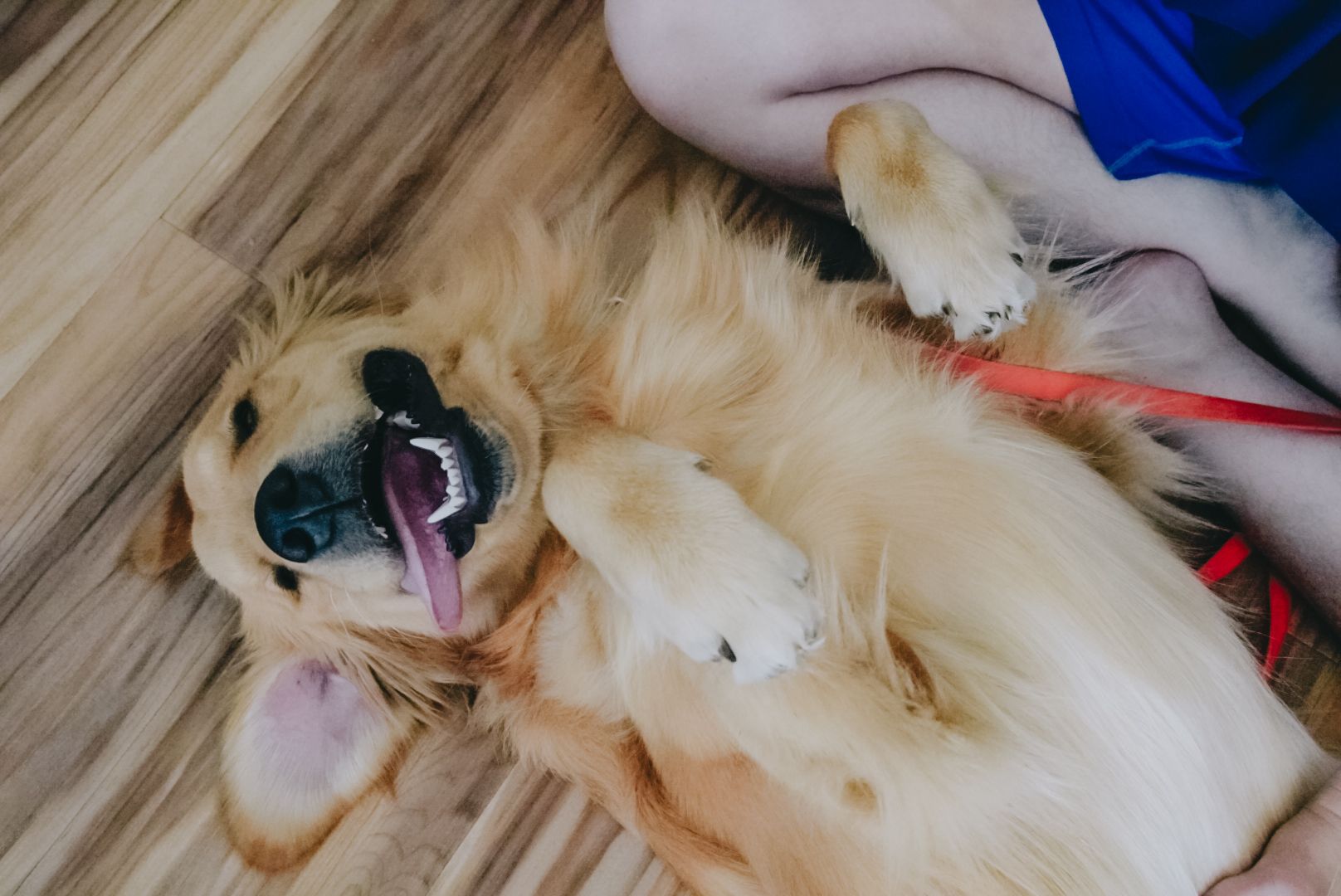
- Take a break. Stop asking your dog for anything. Instead, feed some treats without strings attached, or pull out a toy and have a little game of tug, or just cuddle – whatever your dog likes to do to have fun and relax. When a kid gets so frustrated with a video game that they begin to cry, it is time to turn the game OFF.
- Give them a participation trophy. End your session on a success, even if it just a very small, very easy version of what you originally asked your dog to do. Declare them the winner and celebrate. We want them to remember this as something that ended well and we want them to go home with their self-esteem intact.
The Middle of the Ride
Just like humans, dogs can view their lives through various lenses. Studies have found that often, the determining factor in whether a stressful episode is beneficial or harmful to us depends on how we processed it in our brain.
A group of people can get on a rollercoaster together. They each experience the exact same roller coaster ride. But some will get off smiling, one will stagger off to vomit, and others will cling to their partners or parents and declare that they will NEVER do that again.
How is it that the same event is causing different types of stress? Well, because of how each person processed it. The person whose vestibular system goes off balance will experience nausea, which is very unpleasant. Others will experience terror. Others will feel safe and just love the way their stomach drops when the coaster plummets.
The good news is that even if your dog experiences some distress, you haven’t ruined the training session – if you can turn those screams into laughter halfway through the ride, they will still come out grinning, and will remember it as fun and exciting instead of awful.
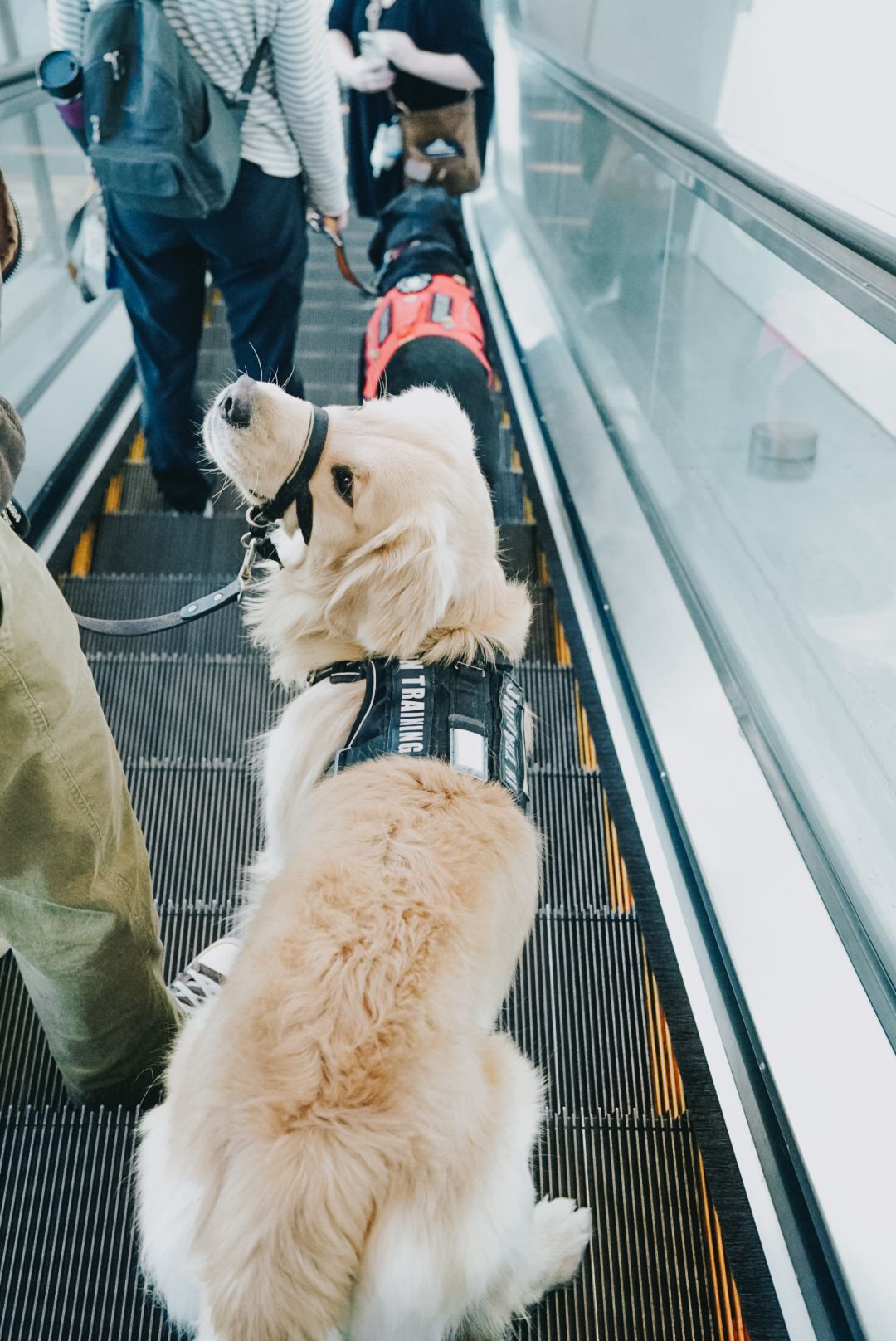
The dog version of the rollercoaster is the escalator.
At Heeling Assistants, we do not consider the ability to step on and off of the escalator to be a necessary service dog skill. Dogs don’t like standing on moving objects. Dogs don’t like standing on metal. Dogs don’t like standing on electrified objects. Dogs really don’t like heights, or falling.
Besides, there are genuine safety risks that come with escalators that both dog and handler need to be careful about.
That being said, it sure makes a human’s life easier if their dog is comfortable with escalators. So, we let the dogs watch the escalator-riding dogs wag their tails as they go up and down, up and down. After they have seen this happen a few times, we suggest they follow the dogs on.
The newbie usually balks. They sometimes back up. They look nervous. They say, “I’m NOT sure about this.”
But are they in distress? Are they panicking? Or are they just nervous?
If they are really frightened, we reassure them, lead them away, and let them watch the other dogs go. Then we might ask them just to walk past the escalator, or stand on the metal floor before the escalator, and then we praise them mightily and declare it a win.
If they aren’t really distressed, we scoop them up (yes, even if they weigh 80 lbs!) and plunk them on. Then, the whole ride up (up is less scary so we start there) we tell them how VERY clever and amazing they are! The dogs usually look bemused, as if they are surprised that they seem to be standing still, and that it is everything around them which is moving instead.
We pick them up at the other end, so they don’t have to deal with the transition, and as we deposit them on the ground we throw a celebration. Treats, rubs, praise, cheering, clapping, dancing – whatever gets that tail wagging! We want the dog to think, “I did it, and it was scary but… it wasn’t as bad as I expected. And my humans are so impressed with me!”
Once the dogs master the escalator, they love the escalator.
The dogs that used to cringe and back away now pull toward it, tails wagging, and need to be adjured to wait until they are given the signal before they jump on.
They have processed the stress of the elevator positively, in a story that ends happily, and now they love it. You can tell from the way they wag their tails and look around at the other people and dogs. Did you see me? Did you see what I did?
They are proud of themselves!
That is eustress.
Occasionally, though, it doesn’t happen. Sometimes the dog genuinely does not like the ride, even once they’ve experienced it a couple of times in a controlled and highly rewarded way. When that happens, we stop asking. We let them watch the other dogs. Maybe we’ll try again in a month or two. Maybe we won’t. We don’t want to cause distress in our dogs, ever.
But we do love watching the dogs discover the thrill of an escalator ride.
We love watching eustress in action.
Post Author:
heelingassistants
Categories:
Date Posted:
October 7, 2026


 LGBTQIA2S+ Safe