Do you love to watch the obedience competitions and agility competitions at the Westminster Dog Show? We sure do!
And watching military dog handlers run their dogs is also incredible!
Then there are agility demonstrations like the Superdogs, who play at the PNE every year and are definitely half the reason I like to go at all.
Dog trainers love to watch other trainers work, and we love watching a well trained dog do what they love to do best – their job.
Unfortunately, service dog training is… nothing like any of this.
“Look What I Can Make Them Do!”
While the best of the best in any dog sport absolutely love what they are doing, and love working with their owners toward excellence… the ultimate goal of these types of demonstrations and competitions is to say, “look what I can get this dog to do.”
Part of our admiration is how incredible the dogs are. The rest is being impressed by the level of control the dog handlers have over their dogs. They say stay, and the dog stays. They say go, and the dog goes. Bite. Let go. Jump. Don’t jump.
The communication between the teams and the seamless coordination is absolutely part of what makes these demonstrations so impressive.
Service Dog Training Is…. Not Like This.
Do we work on teaching the dogs fancy heel work and solid stays? Sure, we do. We have fun posting pics on our Instagram of dogs walking past tempting food items and so on.
But that’s the fun show-off part.
Most of it, like what the dogs actually do most of the time… is not as interesting to watch.
Service Dogs Are Trained To Be Unobtrusive
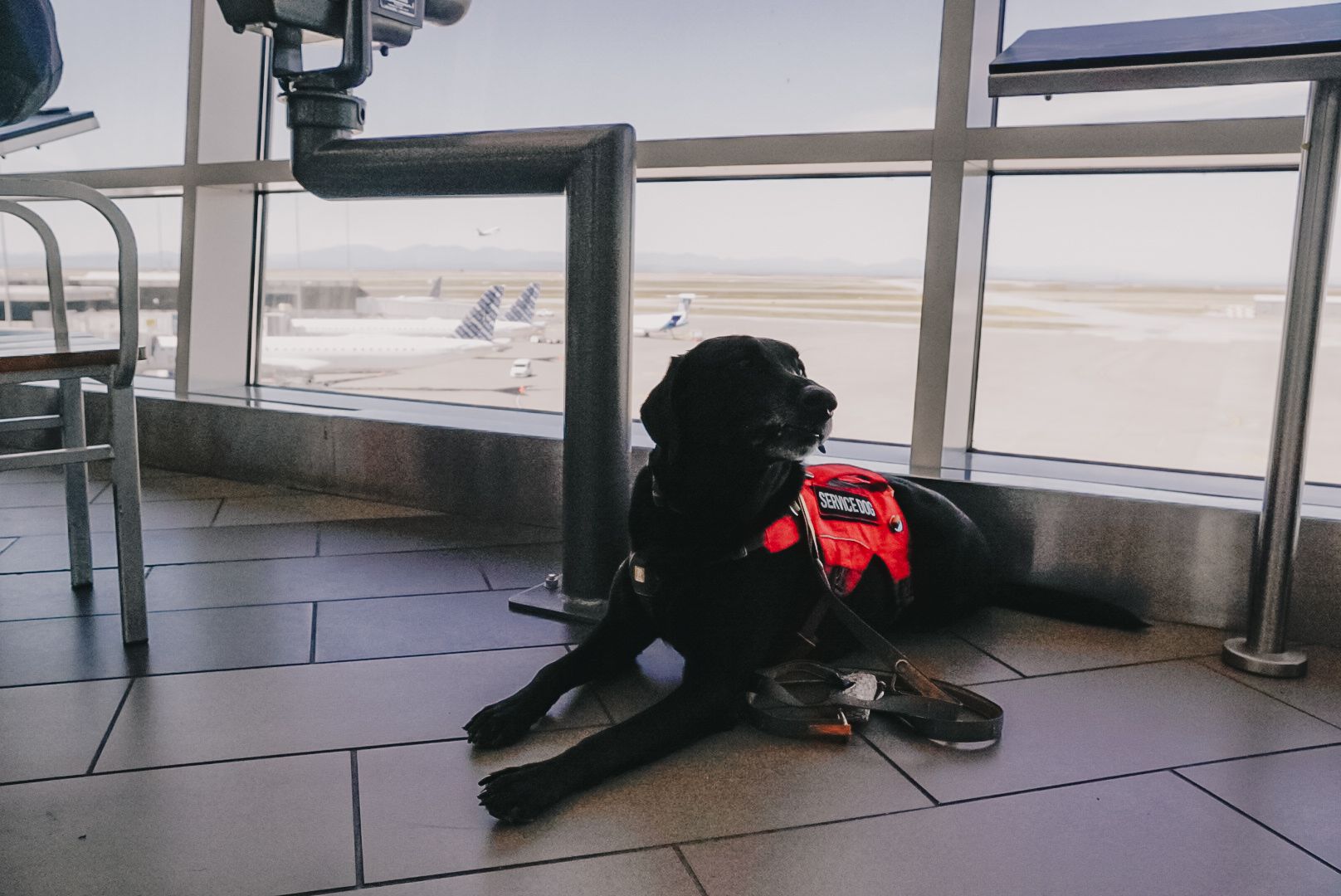
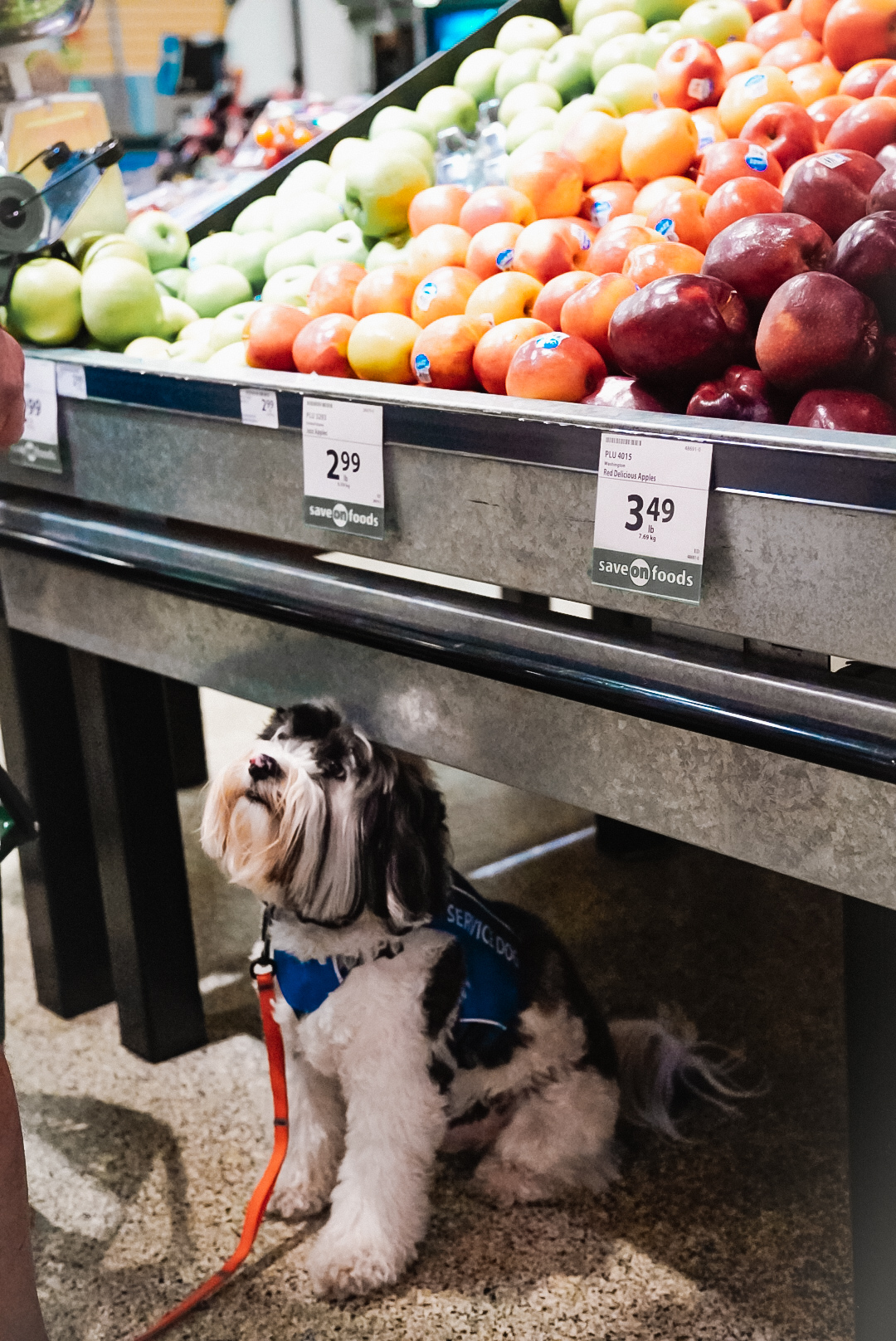
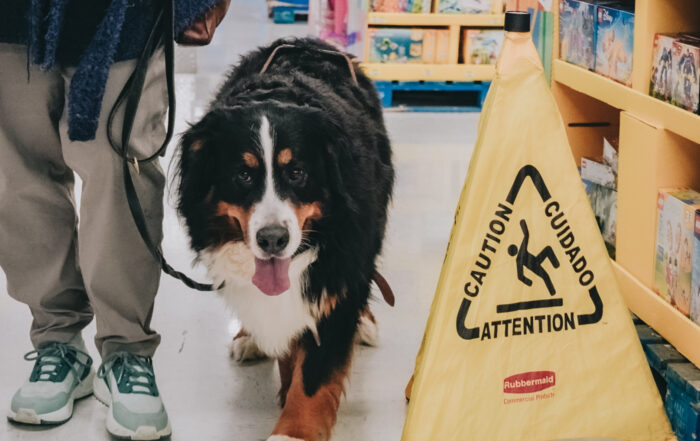
Most of the time, a service dog’s job is simply to be invisible. Take up less space, stay out of people’s way, and lie quietly until your person needs you.
When your person does need you, you are expected to do your job as quietly and efficiently as possible, without being too distracting or obnoxious to the public.
A dog who detects an oncoming seizure or a drop in blood sugar is more likely to whine and nudge their owner, not bark and start leaping about. They’re not suppose to disrupt the entire restaurant.
A dog who has been asked to pick a napkin off the floor is expected to stand quietly, pick up the napkin, deliver it, and go back to sleep under the restaurant table.
No applause, no yelling men in big suits wrestling with them, no loud cheers.
The biggest compliment a service dog user can receive about their dog is, “wow, I didn’t even realize there was a dog here until just now!”
Service Dogs Work Is A Marathon, Not A Sprint.
Our dogs can show off a flashy heel the way the dogs in the obedience competitions do… for about as long. In other words – for maybe a few minutes at a stretch.
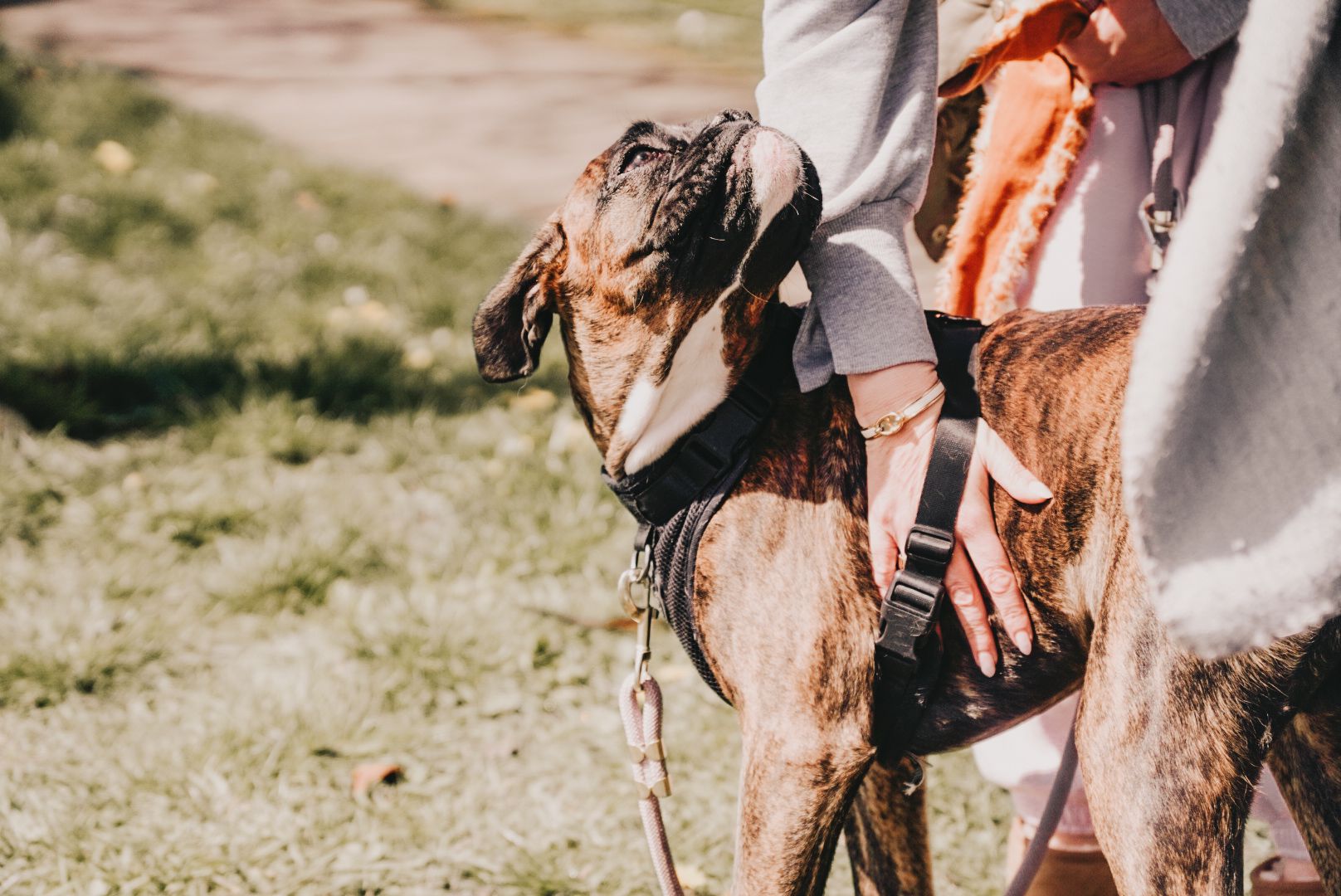
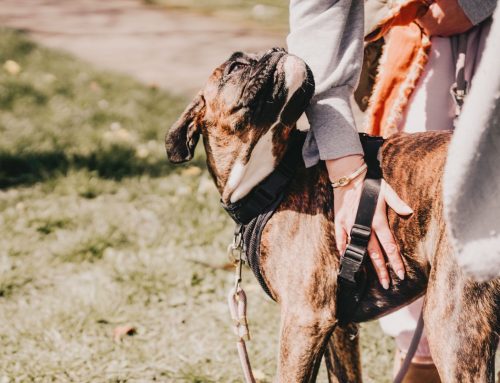
That kind of heeling looks great, but watch again – look how the dog’s head tilts upwards to constantly watch their handler, how they prance their front feet, trying to slow down to match a slow human walk.
Imagine doing that for hours, and hours, and hours… every day.

This isn’t sustainable.
A dog who is pushed to behave that way all of the time they are in public is going to end up with neck and back problems, at the very least.
When it comes to service dogs, we want to be able to pull out a showy heel now and then – when someone questions the dog’s legitimacy or the dog is being asked to walk through a particularly distracting situation – but first and foremost, we want to maintain the health of the animal for their entire working life.
This means that the dog must learn to split their attention – they have to watch where they are going, and look ahead of them in the way that is easy and natural… while also keeping track of where their person is.
It’s not as impressive, but it is better for the dog’s health.

When it comes to staying close to their person, dogs solve this one of two ways.
Some trudge slightly behind their person so they can look straight ahead and still have their owner in their peripheral vision… But most choose just to glance back or flick an ear back every few feet to check their handler’s position.
Shoulder checker dogs need to switch from side to side often, so they aren’t constantly turning their head in one direction again and again. If you’ve ever had a job that involved repetitive motions, you know how quickly that can land you in an occupational therapist’s office.
Some handlers choose to let their dog move from one side to another on their own, while others simply ask the dog to switch to their opposite side every 10 minutes or so. But if they want to avoid their dog developing health problems, they have to encourage the dog to move their body as naturally and comfortably as possible.
For the same reason, many service dog users have ramps for their dogs to get in and out of the car to minimize impact on their joints, and choose elevators and escalators over stairs to protect the hip and knee joints.
Service Dog Training Requires Disobedience
The biggest way that service dog training differs from obedience training or military/police training is our encouragement of disobedience.
Yes, we want our dogs to do what we tell them to do… unless they think it is a bad idea.
Most dog training assumes that the dog handler knows and fully understands what is going on.
The only other kind of dog training I can think of off the top of my head which does not is scent training. A drug dog must find the drugs even when their handler doesn’t know where it is. When a scenting dog is using their nose, the dog is in charge, and the handler is the follower.
Of course, many service dogs are scent dogs.
A fully trained gluten sniffing dog will alert to gluten even when their human has no reason to believe there is any gluten in their food. We lack the dog’s sense of smell so we have to trust them when they tell us something – even if we think they must be wrong.
Similarly, a guide dog is using its powers of scent and vision to navigate the world for their blind handler. The dog has knowledge that their handler does not, and so when the handler tells the dog to go forward, the dog has to actually decide whether this is a good idea. If it isn’t safe, the dog refuses to do what they are told.
Even in cases where the dog’s natural senses are not necessary for their job, often the dog knows how to do their job best.
I’ve certainly tried to tell a dog to pick up an item a certain way, only to have the dog ignore my suggestion and do it a different way than I suggested…. and it worked.
The dog in these cases looks at me as if to say, “don’t tell me how to do my job.”
It’s Not Flashy, But It Is Cool.
I love my job but I have to admit: the dogs, when fully trained, don’t look as impressive as the dogs on television.
They plod along next to their owner, glancing casually around and occasionally checking on their person.
They curl up and sigh in a restaurant, prepared to take a nap.
They refuse to do what they were told, do their job instead, and then go back to sitting quietly, looking unimportant.
Our triumphs are quiet ones.
Important ones, though. Important.
Post Author:
heelingassistants
Categories:
Date Posted:
June 28, 2026


 LGBTQIA2S+ Safe