
A person walks into a business.
They aren’t carrying a white cane, they aren’t in a wheelchair, and they are no more than 25 years old.
They also have a fluffy white dog. They claim it is a service dog.
Is this a real service dog?
Before you answer, you should know: Nothing listed above can give you any information one way or another. You don’t have enough information to answer.
Many disabilities are invisible. The person could be Deaf, or have autism, or PTSD, or long covid, or cystic fibrosis. So a young, healthy-looking person can still have a disability.
Most service dogs are Labradors and golden retrievers. These breeds are the most versatile and most likely to succeed in a service dog program. But while not every dog can be a service dog, a service dog could be any dog. All the dog needs is a lab/golden retriever-like personality, and those can pop up in the most unlikely breeds every now and then.
So the person’s appearance tells you nothing. The dog’s appearance tells you nothing.
Now, what if they pull out an official-looking card that confirms that the dog is a service dog?
You still don’t have enough information.
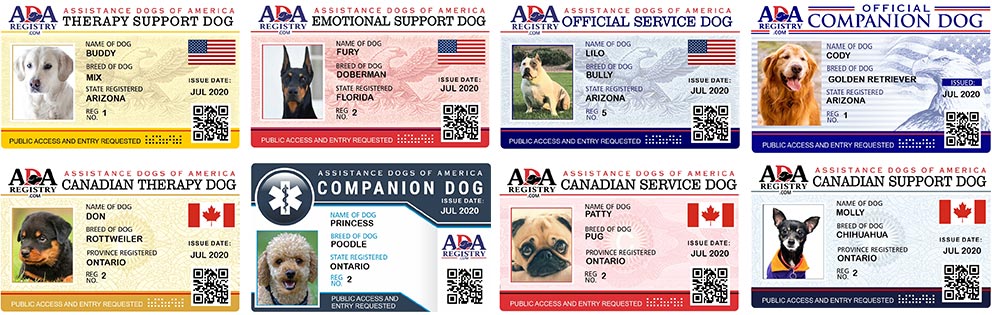
Cards can be purchased online, including cards and tags that look very much like the provincial certification card.
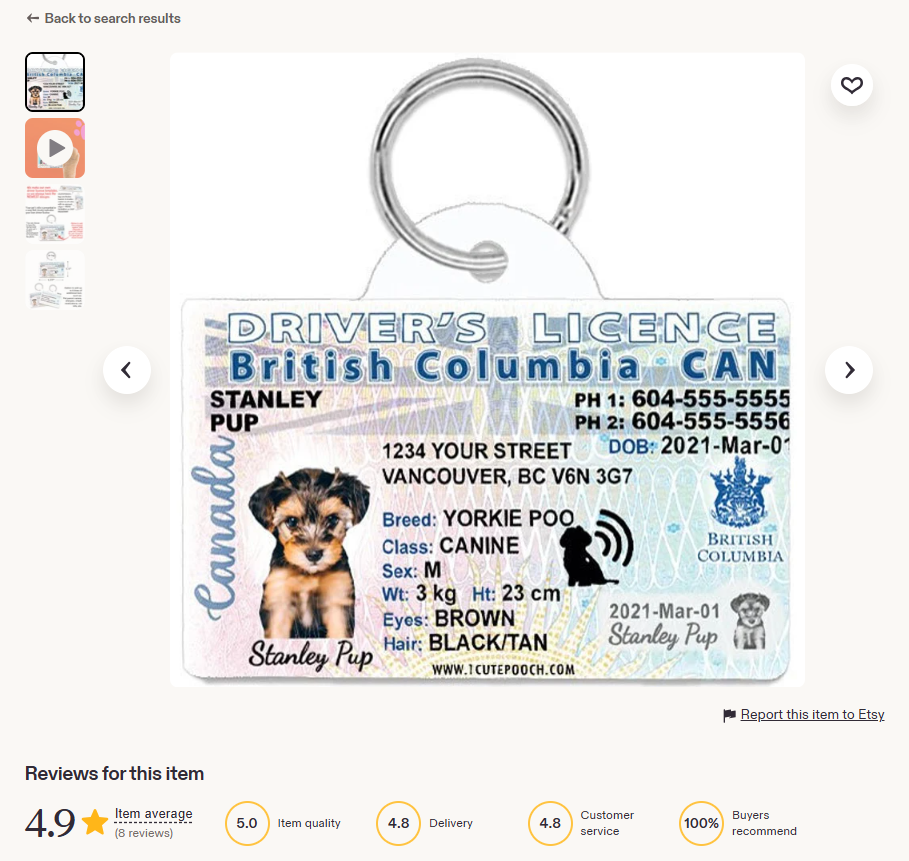
In fact, when you look closely you realize it IS from a novelty website – you can see the company name at the bottom.
You still don’t have enough information.
Some people with real honest-to-goodness certified service dogs get tags like this because it saves them the hassle of opening their wallet every time – people see it and it looks official so they back off.
Good news: It doesn't matter!
The fact is that if a person identifies themself as a person with a disability and identifies their dog as a service dog, that is supposed to end the matter. It is not the job of a customer service employee to determine whether this person is disabled or whether this dog is officially certified.
No matter what your boss tells you. If you work for a corporate company, check with headquarters – they'll tell you to back off.
Just the act of requiring an I.D. can result in a human rights tribunal case. Big companies know this, and they will squash any manager who tries it.
I find that Mr. Loo refused entry to the Complainant only because she did not provide an identification card for her guide dog.
I am quite certain that, in his own mind, Mr. Loo was merely being diligent and that he did not intend to discriminate against the Complainant. However, it is not discriminatory intent but rather discriminatory results which are prohibited by human rights legislation.
I find that Mr. Loo's request that the Complainant provide identification for her dog before she would be permitted to enter the store constitutes discrimination regarding a service customarily available to the public because of a physical disability contrary to Section 8 of the Code.
–British Columbia Human Rights TribunalDate: 1997-06-11Citation: Feldman v. The Real Canadian Superstore, 1997 BCHRT 18 (CanLII), <https://canlii.ca/t/h3w0r>, retrieved on 2026-07-16
More good news!
Even if the dog is an honest-to-goodness-really-certified service dog, a business can still kick them out!
Businesses only need to treat disabled people like regular customers (and accosting them and asking them for identification is not treating them like regular customers).
If a customer starts urinating on your walls, starts eating your produce, threatens your employees, threatens other customers, or starts yelling loudly, you can kick them out.
That means that if the dog urinates on your walls, starts eating your produce, growling at your employees or other customers, or starts barking its head off, you can kick them out!
There's the additional benefit of the fact that behaviour like this pretty much guarantees that this dog is not certified, or if it is, will certainly not successfully re-certify as they need to do every second year.
So, if you're asking yourself, "Is this really a service dog?"
There's a simple answer: Just stand back and watch.
A service dog will be quiet, polite, and calm, and pleasant to everyone. That's more than you can say about many of the other customers you will deal with today, isn't it?
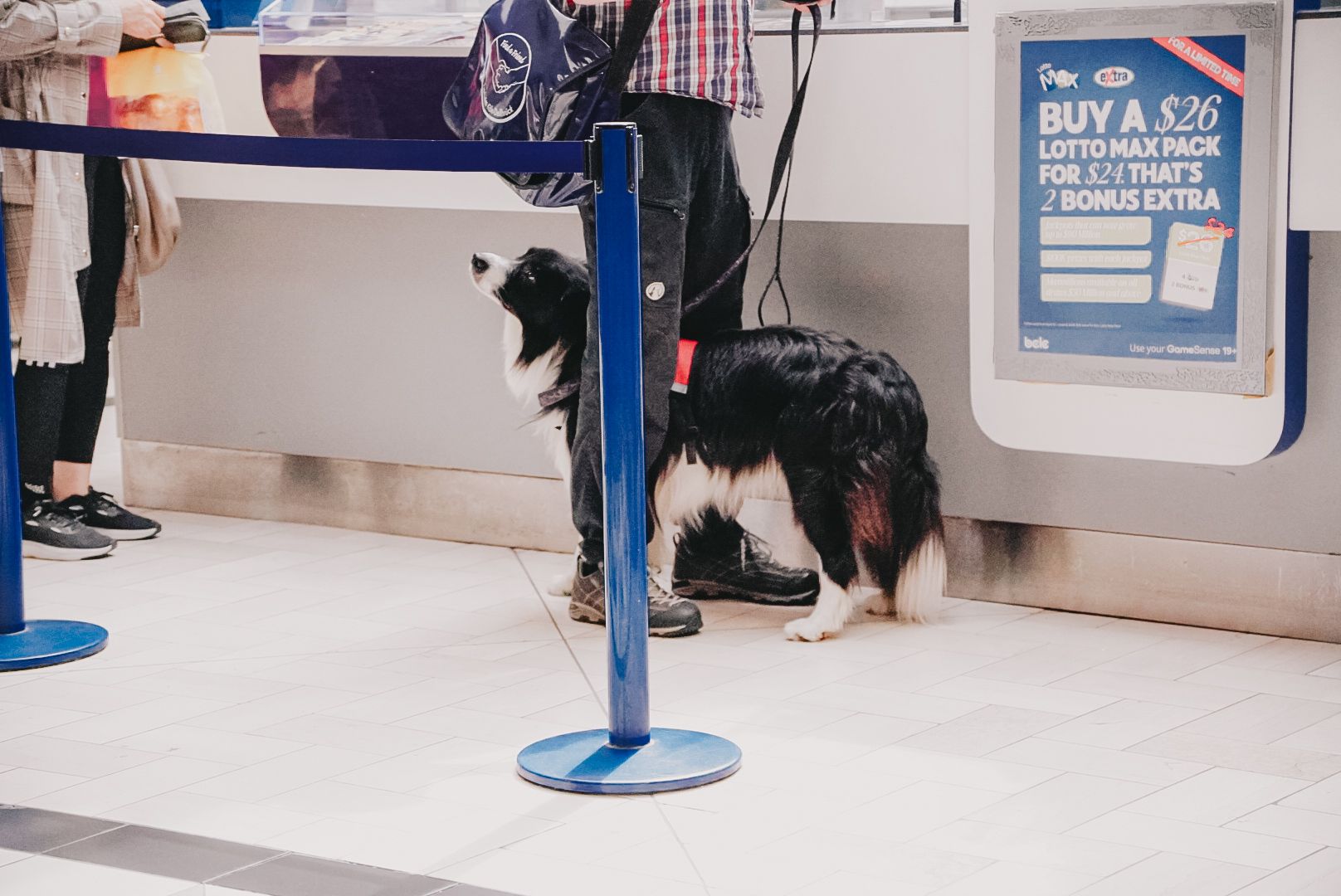
If that isn't the case… go ahead and kick them out. If you can prove that they were causing your business significant troubles, or acting in a way you wouldn't tolerate from a human being… you will win in court.
Just for heaven's sake, don't deny them entry to begin with.
Post Author:
heelingassistants
Categories:
Date Posted:
July 16, 2026






 LGBTQIA2S+ Safe