No matter how much preparation you do, sometimes there is no way to prepare for the way having a baby can blast a hole in your life. People generally know this, and even expect it.
Not as much with puppies, though.
I was as prepared as a person could be when I got my sheltie pup in 2004. I had spent the last year virtually memorizing the two dog training bibles of that era, Don’t Shoot The Dog and The Culture Clash. I had the supplies, everything from an exercise pen to Kongs. I had the support – I would be staying with my parents for the first few months.
I still nearly had a nervous breakdown around day five.
I’m not alone. I see all sorts of people hit that point – sometimes it is on day one, sometimes day 5, and some survive well into the 12-16 week mark before they start really wondering if they have made a terrible mistake.
It is not unusual for people to give the puppy back to the breeder or look for another home, because the work of caring for a puppy is just so much work.
That’s how I ended up with my dog Ginny. She was originally my friend’s puppy. My friend realized they did not want to be responsible for a very sharp toothed baby.

Ginny doesn’t look like something that would push her new mom to nervous breakdown, does she? But she did.
Somehow people tend to assume that raising a puppy is easier than raising a human infant. Unfortunately… it is not.
- Puppies are canine toddlers. Just like young humans, they want constant attention, don’t like to be left unattended even when (and sometimes especially when) they are sleeping, they put everything in their mouths, and they have no sense of personal safety. So just like with a toddler, we need gates and pens to corral the puppy away from potential hazards, we need to teach them concepts like empathy, gentleness, how to settle down for a nap after an exciting morning, and watching for cars before crossing the road… not to mention teaching them rudimentary English.
- Puppies are young predators. Nature has prepared them for a life spent hunting for food, and the way they prepare is by rooting out everything they can smell, hear or see, and then attacking it. From Styrofoam cups to human toes, puppies will pounce on and try to eat everything in their reach. It only stops when they sleep.
- Puppy teeth are sharper than adult dog teeth. Since puppy jaws are weak in comparison to adult jaws, nature has compensated by making their milk teeth needle-sharp. It doesn’t take much pressure to cause pain or to puncture human skin, and your puppy will be trying to put parts of your anatomy in their mouth every few minutes when they are awake.
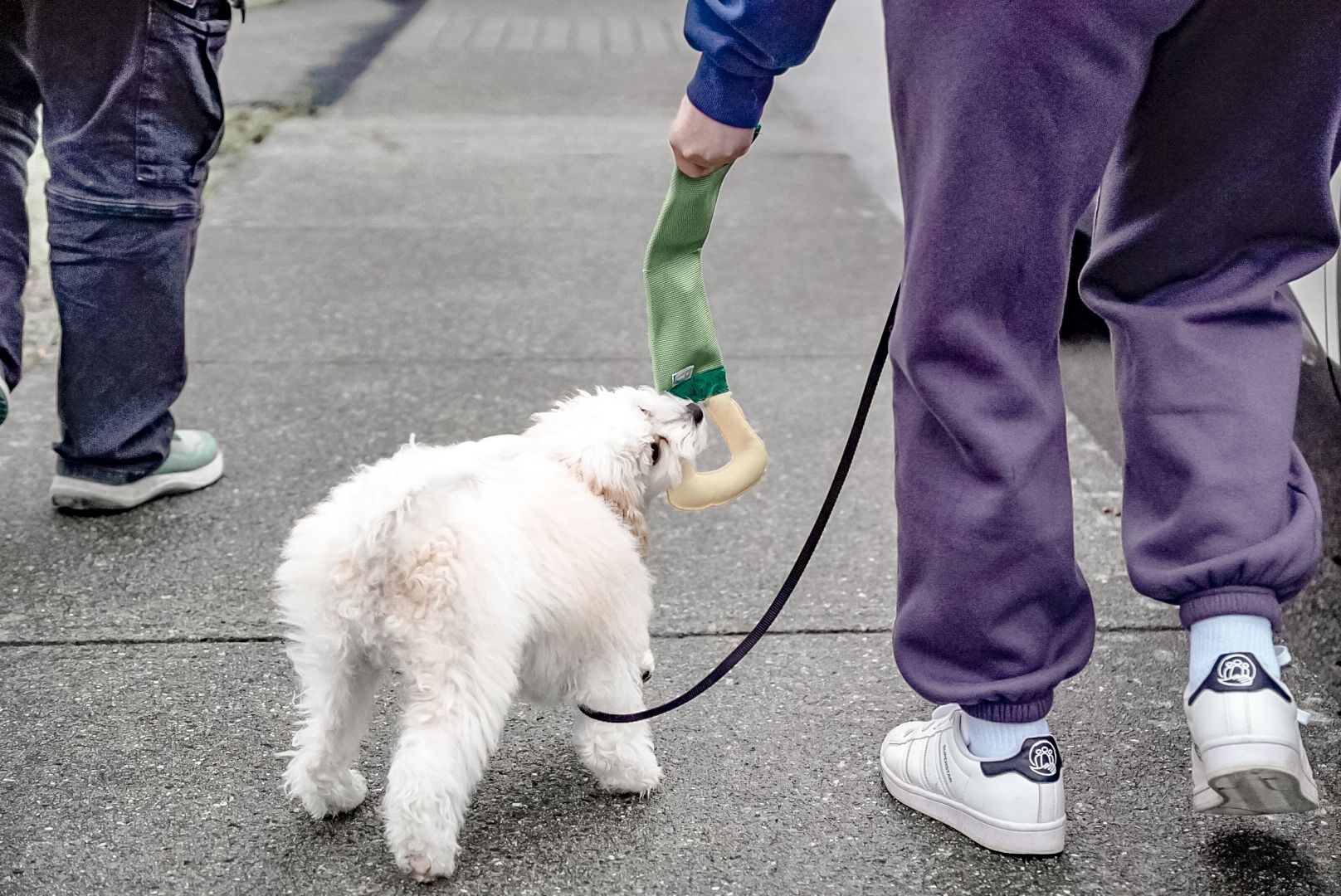
- Puppies use their mouths for hands. Not only will the puppy be pouncing on and biting every thing in their reach, but even if they just want to pick something up or hold your hand, they will be doing it with their mouth. The mouth with the aforementioned needle-sharp teeth. It’s like having a toddler version of Edward Scissorhands. It takes a lot of work and a sometimes a lot of Band-Aids to teach them how to wield their weapons gently.
- Puppies go through adolescence. That dreaded teenage phase, which consists of rebellion, obsession with socializing with peers, and becoming an impulsive dopamine junkie happens to dogs to. They are social mammals and their brains mature in the same way, in the same stages. Just… (thankfully) much faster.
The one thing that can be said for raising a puppy is it is less of a commitment than becoming a parent. While it takes twenty to thirty years to raise a young human to adulthood, it only takes two or three to raise a puppy.
What’s your worst memory of your dogs’ puppyhoods?


 LGBTQIA2S+ Safe