

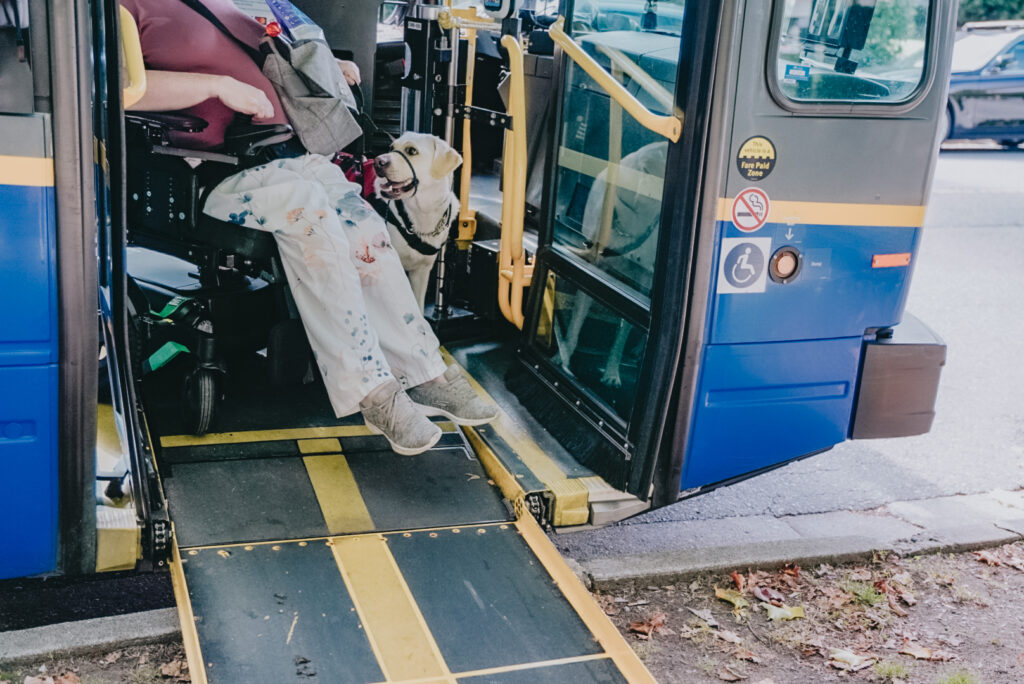
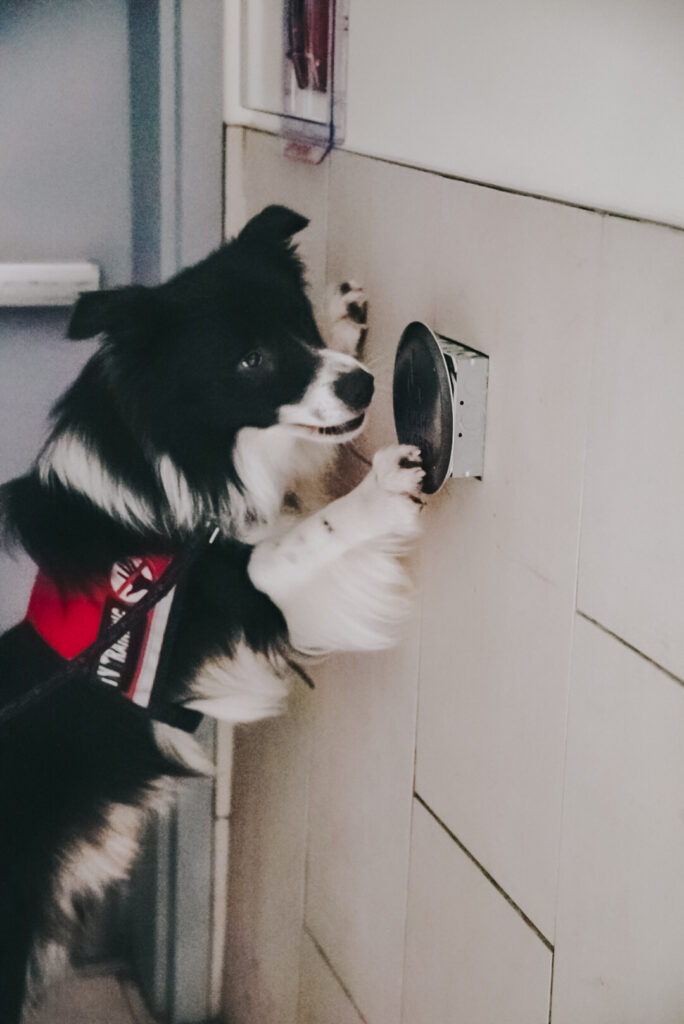

Professionally Coached. Owner Trained.
Our trainers are experienced professionals with post-secondary education specifically relating to disability, psychology, and service dog training. With our knowledge and experience, we can help guide you into training your service dog to a professional standard:
Assistance With Every Stage
Which stage are you in right now? Click the stage to see how we can help.

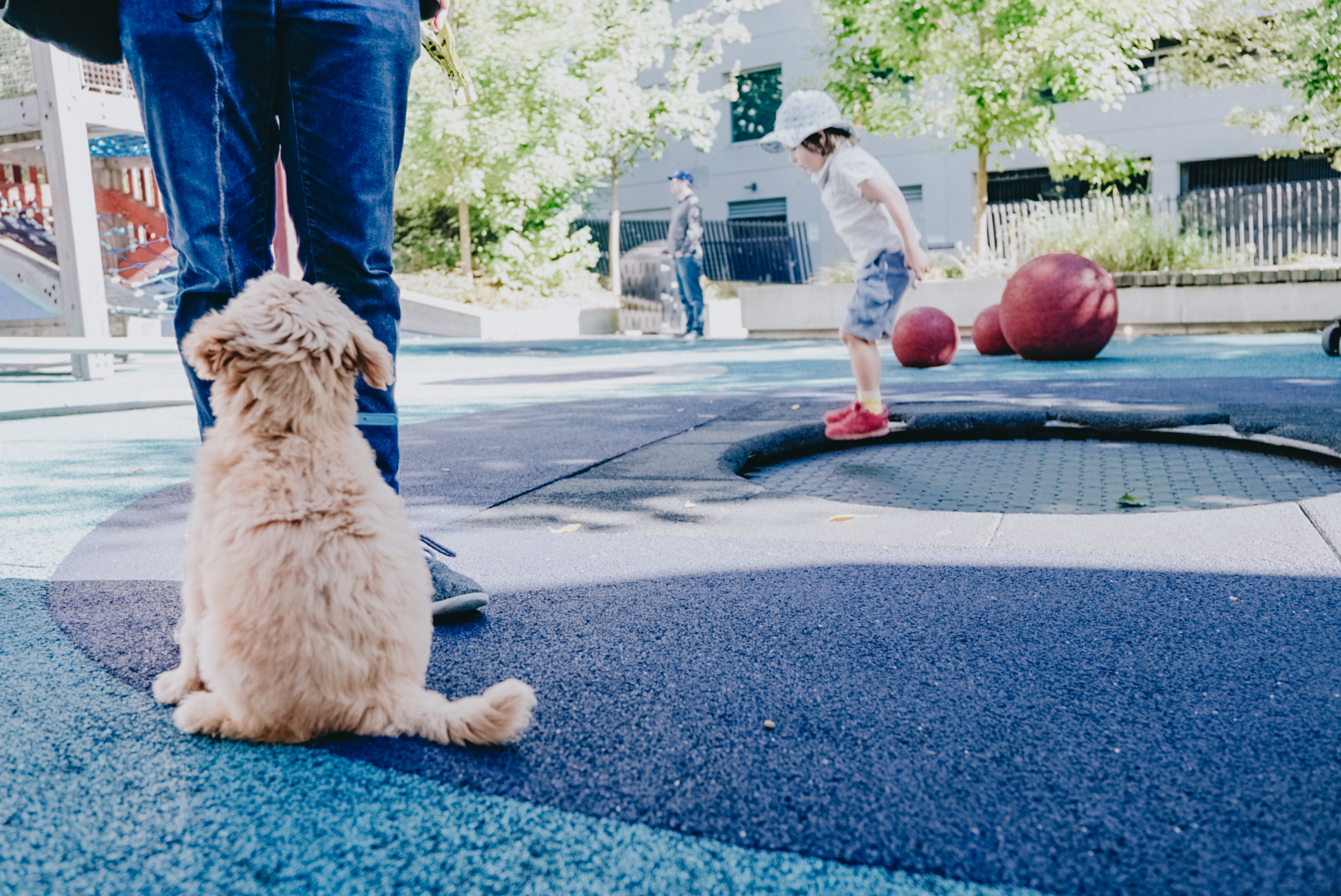
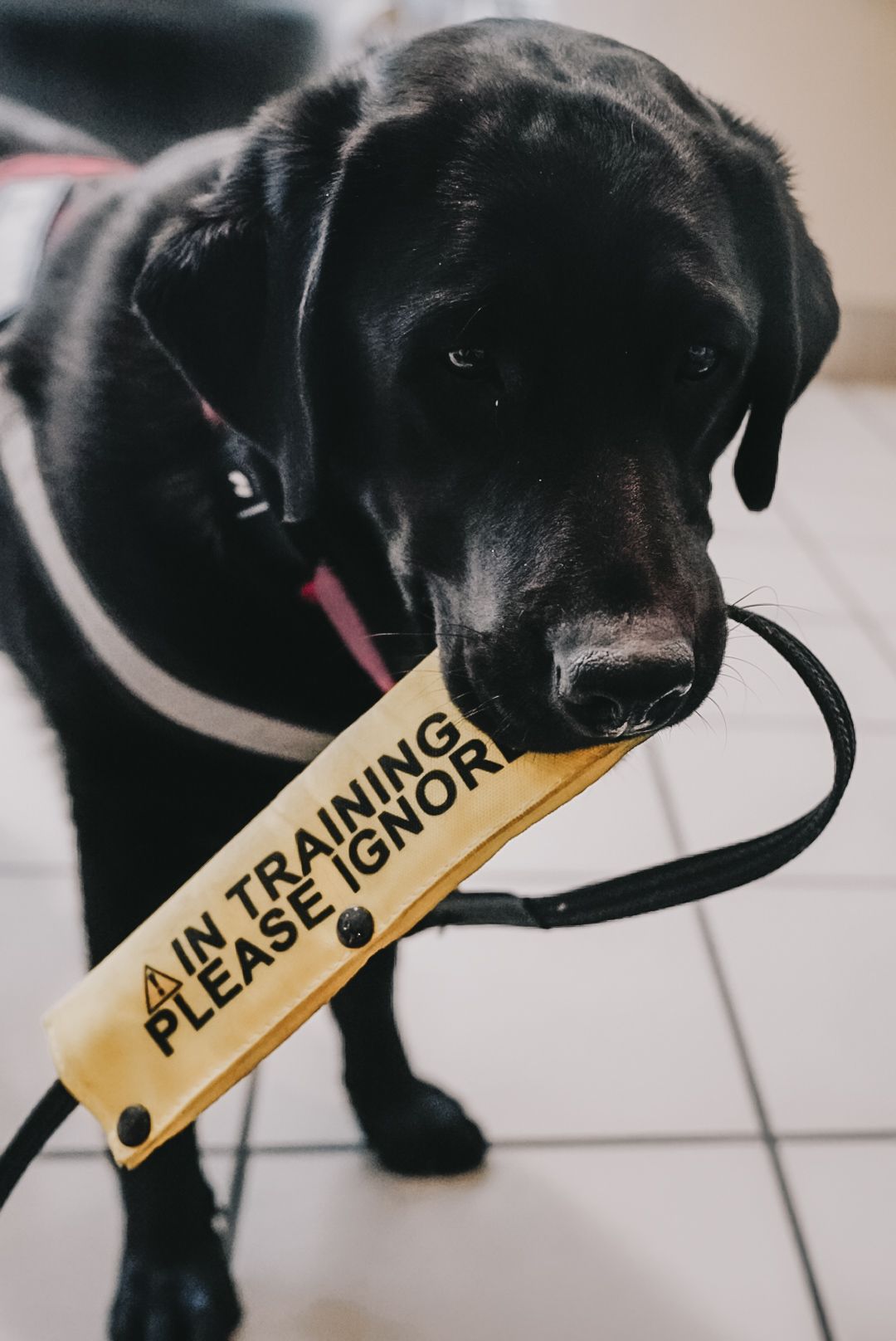
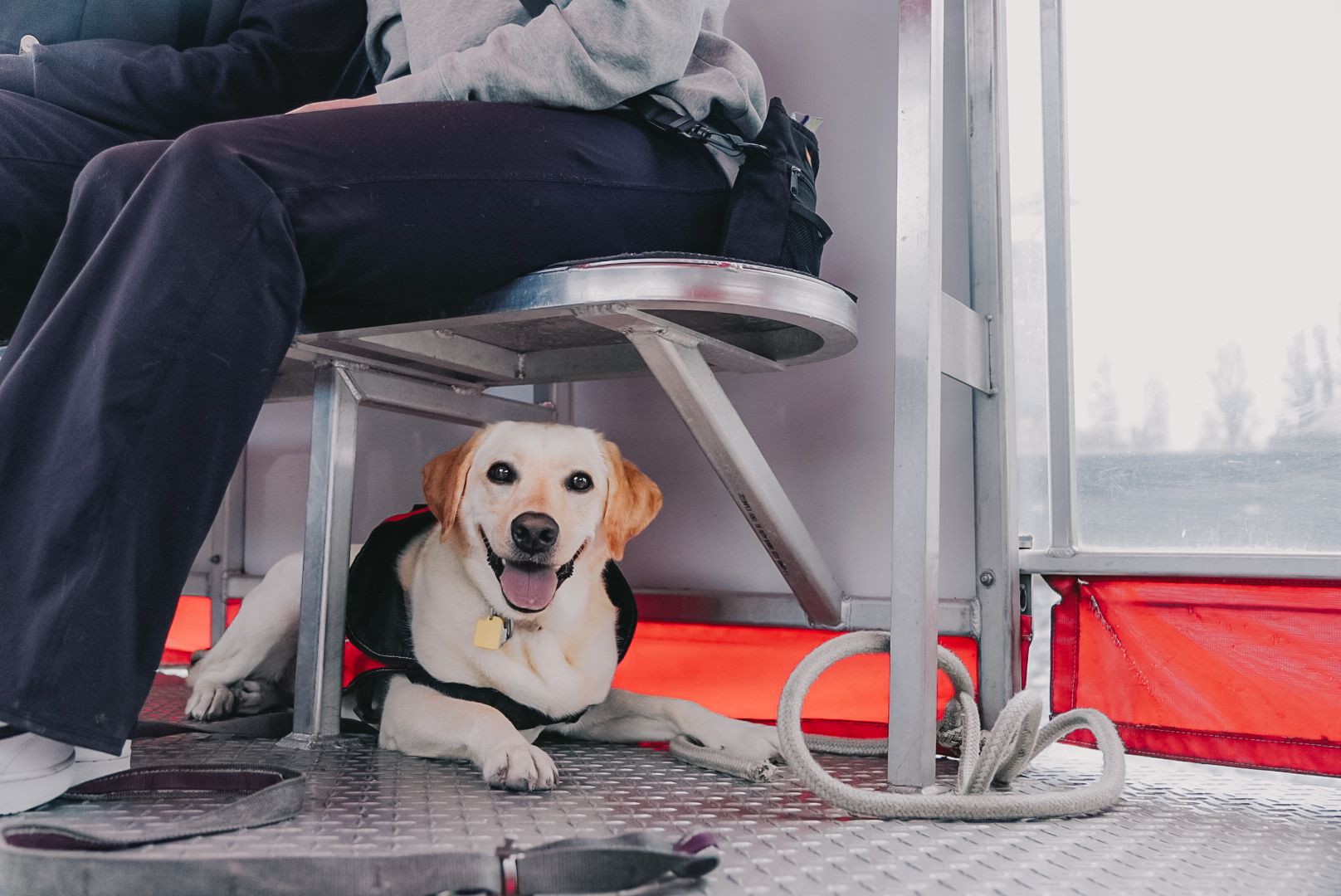
Service Dogs Are Disability Aids
We strongly believe that the bond between an animal and a human brings strong benefits of love and companionship. Studies have shown that contact with a loved pet reduces stress hormones and lowers blood pressure. Talking to a pet releases the same brain chemicals as speaking with a human.
For this reason, all dogs are emotional support dogs. Legally, however, they are not service animals.
A service animal is trained to the highest standard.
The animal is not only comfortable in public spaces, but they are safe for the public to be around. They are allowed into public spaces where animals are not usually permitted because they are needed by their human guardian – because they provide a medical function.
Guiding
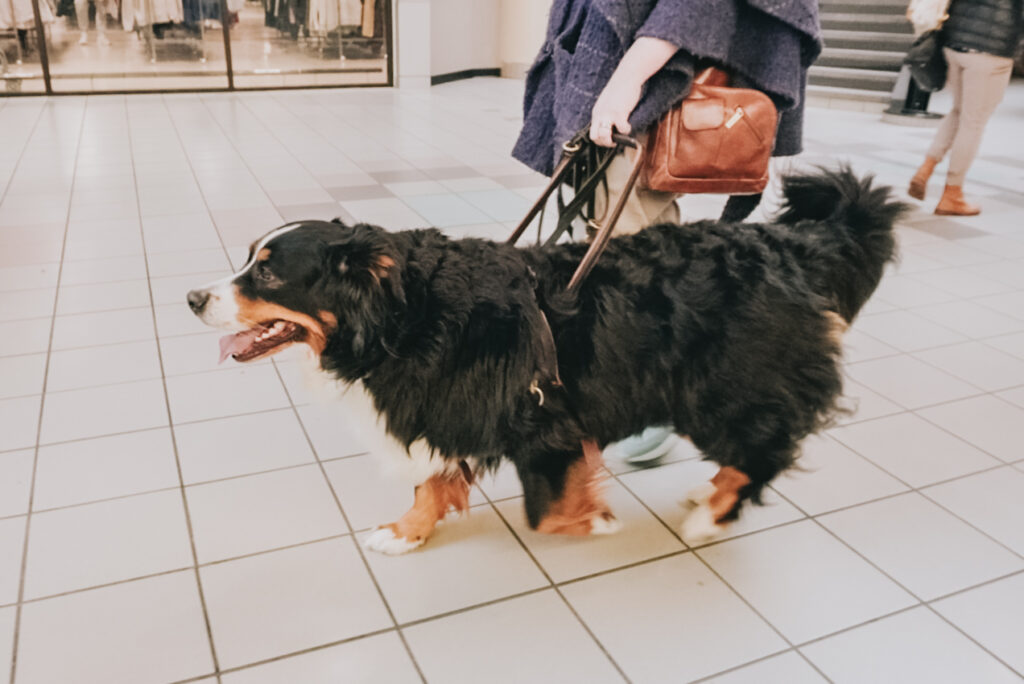
- Blind/Visually Impaired
- Easily Lost/Disoriented
- Dissociation
- Functional Neurologic Disorders
- Autism
Dogs can lead their handler around obstacles or to a specified location such as the stairs or a chair.
Mobility
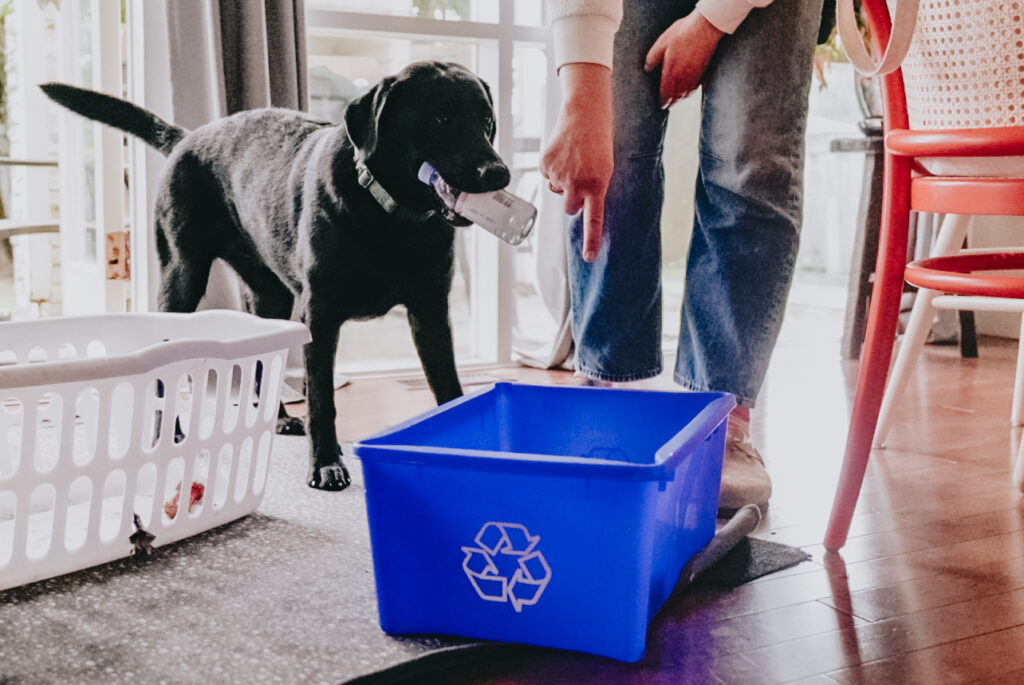
- Arthritis or Ehlers Danlos
- MS / CP
- Limb Loss or Weakness
- CFS/ME/ Long COVID
- Paraplegia
Dogs can bring or carry objects, tug open doors, and generally act as an extra hand for people who have mobility problems.
Alert
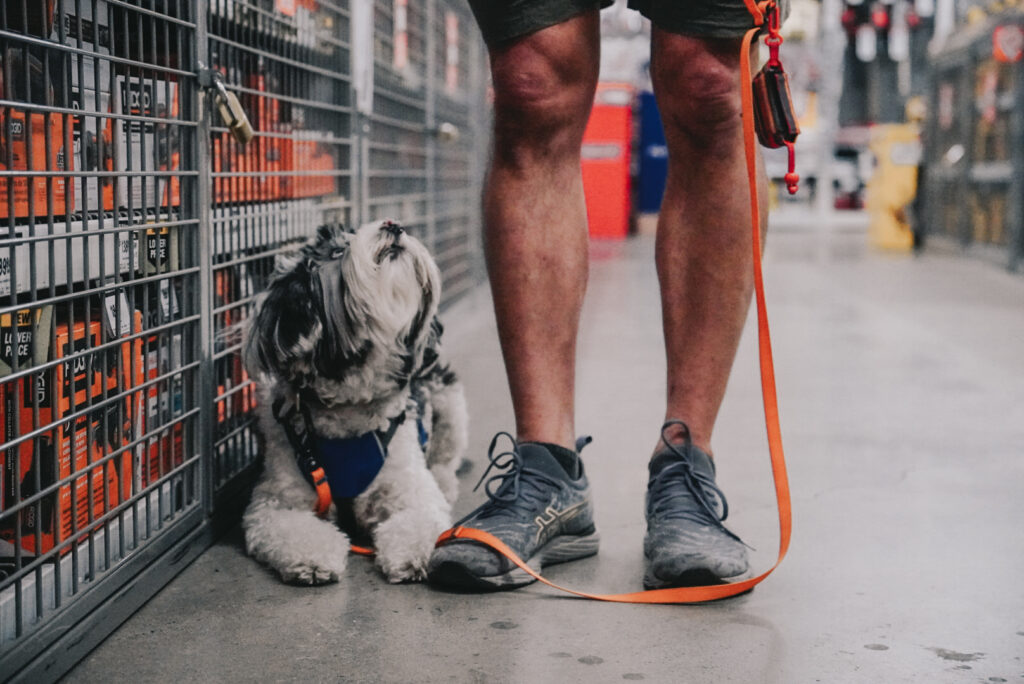
- Deaf /Hard of Hearing
- Allergies
- Diabetes – Type 1 or 2
- Psychosis
- Trigger Alert
- Eloping Child
Dogs can notify their handler about smells or sounds that the person themselves may not be able to detect.
Response

- Seizure disorders
- Heart attacks
- Autism
- PTSD
- Psychosis
- Panic Disorders
Dogs can respond to a medical incident or crisis in a way which is helpful to their handler.
Frequently Asked Questions
- All
- 1. Start Here!
- Programs and Classes
- Service Dog Laws In Canada
- Service Dog Training
- Service Dogs In BC
Everyone wants to know how long it will take to train their dog to become a certified service dog.
We cannot tell you.
It depends on the age of your dog when you start, your dog’s aptitude for learning what they need to learn, and how much time you can dedicate to teaching your dog each day.
From puppyhood to certification, it usually takes 1-2 years to train a service dog.
Those who start with an adolescent or adult dog can take anywhere from six months to three years, depending on how much we need to untrain and retrain the dog’s brain, and depending on the dog’s aptitude for the work.
Many dogs never reach certification either because they are not suited to the job, they dislike aspects of their job, or because their human partner does not have the time or patience to teach them.
Our curriculum is not time-based so much as skills-based. We must start with the skills your dog does have, and work towards developing and improving new skills.
Your dog begins learning on the day they are born. Everything that happens to them will affect how they perceive and react to the world. So whether or not you are “training” your dog, your dog is learning.
What you are really asking, though, is when you should start teaching your dog obedience, and/or service dog skills.
Obedience is over-rated in service dogs. We are much more interested in:
- Social and environmental confidence.
- Good social skills and etiquette.
- Competence and self-sufficiency.
- Good emotional regulation.
- Their ability to make wise decisions.
All of this is much easier to teach in puppyhood.
Other things, like sit-down-stay are easy to teach at any age.
Most of the skills a service dog performs rely on abilities that are developed in puppyhood, as well. For example, if we would like a dog to become a gluten-detecting dog, we should raise them with many scent exercises to stimulate the development of the scent processing part of their brain.
Training must be geared to the dog’s developmental age, but the earlier it starts, the better. Our puppy classes are open to any pups who have received vaccinations and deworming within the last three weeks.
We do help professionals train their dogs to become facility therapy dogs.
Therapy dogs need to be comfortable with a wide variety of people, have excellent social skills, and are interested in meeting and interacting with new people. We can absolutely help you with raising your potential therapy dog to maximize these skill sets, and we can help your highly social and cuddly dog learn how to “read the room” and behave appropriately.
We cannot turn a shy dog into an outgoing dog, or certify a pet dog so it can fly on a plane or be permitted in a no-dogs housing situation.
We are a non-profit, but our services are not free. Until we receive enough in grant and donations to subsidize every single person, we cannot sponsor all of you.
Currently, our goal is to have enough left-over money after paying our staff to sponsor individual teams whose circumstances make them especially in need of our support. We hope to increase the number of teams we can offer this to.
Follow-up support for our certified teams is free/by donation according to that individual’s financial abilities. We ask those who can afford to pay for our services and support to do so, because in doing so, you help fund training for someone less fortunate.
You can find the cost for each of our programs and services on the program overview page. On the top menu, go to “Training Programs” and then choose the program you are interested in. The price will be at the bottom.
Our prices depend on whether the program is group-based or one-on-one, and whether you can come to us in Coquitlam and surrounding cities or whether we must travel into Vancouver to meet you.
If you’re looking for the cost of training your dog from start to finish, that varies widely based on many factors including your dog’s age, aptitude, and your patience/dedication to working with your dog daily, not to mention the amount of support you need from us.
This page can help you decide where you should start, or you can take our Ballpark Cost Quiz!
Many people reach out to us looking for help with certifying their dog so the dog can fly in an airplane cabin with them.
We do not help with this.
If your dog would be too stressed or unprepared to fly in cargo, then your dog would not make a good service dog candidate. Somewhat ironically, a properly raised service dog would be just fine relaxing in their crate on a plane ride. Service dogs ride in the cabin because they have an important job to do.
If you are looking to bring your dog on a plane, we encourage you to look into the pet-friendly start-up airlines out there. If at all possible, please seek these airlines and use them. We want them to succeed so we can have happy pets flying in cabins without them taking a service dog seat which results in a brittle diabetic having to fly without their dog.
We are very familiar with the world of disability. We understand that you can have a bad pain day, or an important medical appointment, and that these things sometimes crop up at short notice. 24 hours notice is not always possible. We get that.
Our programs are designed to be inherently flexible. We allow last-minute rescheduling due to health concerns, although if we actually show up on your doorstep for a private session and you aren’t there, we will consider that appointment officially missed. You don’t even have to call us – your confirmation email and your automated reminders have rescheduling and cancellation links in them. Just click!
Group classes happen several times a week at different times of day, and members are welcome to attend either one, or both if they missed a week entirely. We have limits within reasonability – you can’t disappear entirely, then show up a year later and demand all your sessions when we may not have room for you. We have a three month expiry limit on the classes you pay for.
But we are absolutely flexible and willing to work toward an accommodation that works for everyone involved.
One-on-one training sessions happen in your home or neighbourhood ( our in-zone region of Tricities/New Westminster/Burquitlam or our out-zone region of West Burnaby, Vancouver, or North Van which we travel to on certain days) or at a park or store.
Most of our group classes happen at a rotating variety of public locations, from parks to stores. Occasionally we have seasonal special event field trips, like a movie night. These locations are usually in our
We try to ensure that many of our locations are close to skytrain/transit, but not all of them are. Sometimes clients arrange carpools when they live close to each other. We’re all disabled and we all try to help each other.
Example locations for puppy/remedial classes include Canadian Tire, Chapters, Michaels, and even locations like IKEA by special permission from management.
Example locations for our advanced training classes include Coquitlam Centre Mall, Lincoln or Lougheed Skytrain Station, Royal City Centre in New Westminster, and Lougheed Mall.
Below is an example calendar, showing the days when our trainers are available for one-on-ones in zone or out of zone, and when and where classes are held. The image below is not current but should give you a good idea of how our schedule works.

March Calendar
Each of our classes occur twice a week. The active days for each are listed along with their prices on the page for that class. Each one has a weekend morning and a weekday evening available. Enrolment is rolling so you can start almost any time (except when they are paused for Christmas, for example).
If you’re struggling to understand, that is okay.
There are some important things you need to understand:
There are many stages to training a service dog.
Stage 1 is finding the right dog. This includes looking at breeders, talking to breeders, and/or temperament testing and health testing the dog you are considering.
Stage 2 is ensuring that the puppy is socialized to stores and public places, that they have a secure attachment to you, their guardian, and that you can communicate with each other effectively.
Stage 3 is teaching your dog the skills you would like them to learn – such as identifying a certain scent, responding to a certain type of event (like a ringing phone), bringing you the items you ask for etc.
Stage 4 is putting this all together and working on behaving in public and performing their skills and tasks under high distraction.
If you plan to train your service dog, this is your project.
We are here to help you and provide you with the knowledge you need to maximize your chances of success. The amount of help and type of help you need from us will be unique to you and your circumstances. That is why our services are offered more like a bunch of menu items for people to select.
The type of help you get from us will depend on the stage of training you and your dog are at, where you live (are you the Greater Vancouver Area? Or do you need video sessions?) your mobility (can you travel to our group classes?), your finances (can you afford one-on-one sessions?) and so on.
We will only work with dogs and clients who seem promising.
If the dog does not have the right personality, or if you’re finding it too difficult to make time for training, we will decline to work with you, so getting accepted to our programs is always step 1.
We will tell you if, at any point, we think your chances of succeeding are poor, or if we feel that you or your dog are not proceeding at the pace we expected. We aren’t interested in wasting your money. This means that we cannot guarantee success, and the amount of support you want from us may change over time.
To apply to work with us, click here.
We do not provide government certification. The certification you are probably looking for is the one offered via the province of British Columbia. To do this, you must fill our their forms and apply, and then you must go through a public safety test with a contracted official.
We do accredit our own graduates, but in order to be accredited by us, the dog and handler must work with us for at least six months and pass the provincial test.
We then have some additional more difficult items that we require of our dogs – for example, standing still while their paws, mouth, ears and collar are handled by a strange man, being mauled by a child, walking off-leash past plates of delicious human food while other dogs stand nearby, and performing their service dog tasks in high distraction surroundings – before we consider them official Heeling Assistants.
We do not provide letters confirming puppies or untrained dogs as being “in training” to be service dogs unless the client has been with us for six months or more and the dog has certain basic skills and we feel confident in both the dog and their guardian.
While it is frustrating that British Columbia allows landlords to ban pets, that is their legal right. We urge anyone considering raising their own service dog to find dog friendly housing first. It is not always easy find but it does exist! If your current living situation has size restrictions, consult with us about which breeds might be able to perform the tasks you need and fit within your permitted size limits. You might be surprised what a small dog can do.
Yes. Very.
It is so hard that you could do everything right and still not succeed. Service dog schools have poured millions of dollars into research on this subject. They breed their own dogs to their own high standards, raise their puppies carefully, and pay professional trainers to teach the dogs, and with all of that… a success rate of 60% or more is considered excellent. If, out of a litter of six puppies, only four succeed, that litter is considered to be a successful litter and the breeding will probably be repeated.
So, there is no shame in failure – if professional breeders and trainers can’t achieve it every time, no one can possibly expect you to have a 100% success rate either.
It is extra hard when you are living with disability, so you should do everything you can to maximize your chances of success:
It is crucial that you ensure that you are in a good place mentally and physically. You must ensure you have support systems in place. You must ensure that you genuinely enjoy teaching dogs tricks, taking them to the park, and playing with them, because this will take up hours of your daily life for the foreseeable future.
For those who enjoy playing with and training their dog, and who are physically and mentally doing well while they train their dog, the process is infinitely rewarding. You will become a mini dog trainer. Strangers may assume you are training the dog for someone else and ask you for your card if your disability is invisible, and sometimes even if it is not!
When clients drop out it is usually for one of a few reasons:
- Most common – it’s too much work. Their life is already overwhelming and they just don’t have the time to put into teaching and working with their dog on a daily basis. Or, they just aren’t finding it fun, and it is easy to de-prioritize something we consider to be a chore rather than a pleasant part of our day.
- Health problems arise either for the human or the dog. The dog turns out to have bad hips, or the human develops a new health condition which requires significant hospital time and the training grinds to a halt.
- A personality quirk shows up in the dog which makes them unsuitable. We never accept dogs into our programs if we think their personality is not suited to the work, but sometimes new behaviours show up in adolescence or adulthood that make them unsuitable. It can even be harmless – for example, some golden retrievers growl when they pick things up. They are being happy, not aggressive, but it sounds bad to the public and makes them unsuitable for working in public.
Generally, we find that the people most likely to succeed are the ones who spend a lot of time learning about the process before they get their dog and choose their dog with care. Those who have already had dogs in the past and were able to train their dogs to walk nicely on leash, come when called etc are also more likely to succeed.
Only you can know if you are suited to take on this kind of project. For some, it is fun and wonderful, for others it is a drag. But either way it is a lot of work – like learning a new musical instrument or taking up a new sport, your success at least partially depends on how much you enjoy the work and how much time you are willing to put into it.
Another consideration is your ability to learn new things. If we have to demonstrate something once or twice for you, you will progress faster and with less effort than if you struggle to learn new skills and have to be taught many times. Even so, we have had clients with TBIs or cognitive deficits who have succeeded out of pure grit!
Do you have questions?
Chances are that you can find the answers here. We have organized questions by categories such as questions about service dogs, questions about donations, service dog laws in Canada as well as service dog laws in BC.
You can also check out our BLOG for articles on the subject of training service dogs, if you’re just interested in learning more about the process and our process in particular!
Bonus: our blog posts AND FAQ items are written by a real human being! The intelligence is not artifical. Huzzah!
If you are new here, you probably have questions about COST and our ENTRANCE REQUIREMENTS. You will find those in “Start Here!”
The quick and dirty summary:
- Puppies under 4 months – just need to have proof of vaccinations within the last 28 days.
- Puppies over 4 months may require a full assessment. We need to see proof of vaccinations and at least one booster vaccine.
- Dogs over 6 months require an assessment.
You can find a more detailed breakdown HERE.
We are not accredited by ADI.
Yet.
Our goal is to meet ADI accreditation standards and our three year plan includes becoming a candidate organization and working towards meeting their multi-year requirements.
We hold our dogs to high standards and our trainers have worked with ADI accredited organizations in the past, so we have a basic understanding of their standards and expect our dogs to work towards those standards.
However, we are not currently accredited.

 LGBTQIA2S+ Safe