Why Do Service Dog Schools Always Use Retrievers?

The majority of people choose their dog's breed based on aesthetic. But the way a dog looks, or the colour/quality of their coat, is not just skin deep.

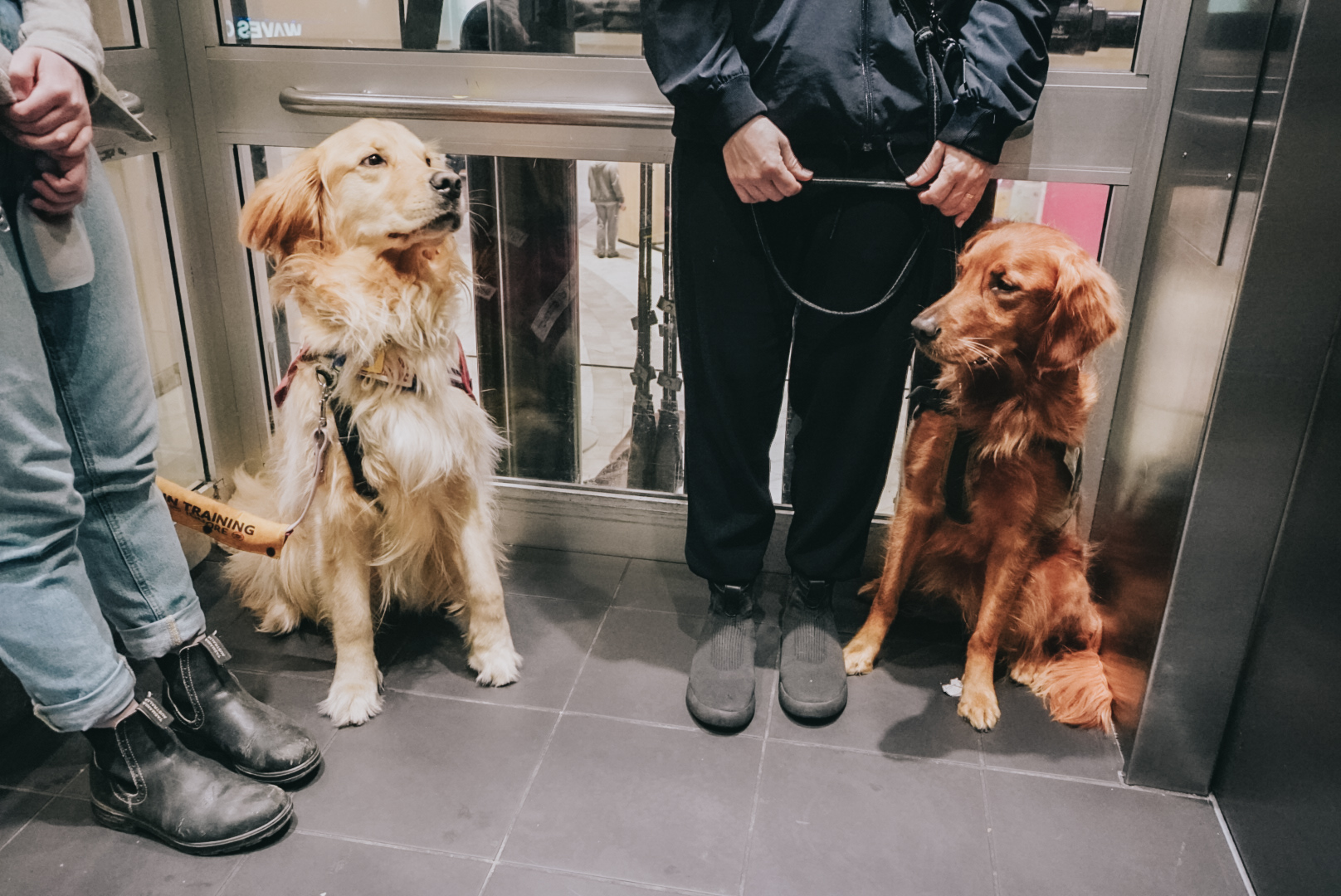
Service dog schools use Labrador and golden retrievers. Here's why.
Post Author:

heelingassistants

Date Posted:

September 17, 2025

Share This:

Dog breeds are not like Fortnite skins.

The majority of people choose their dog's breed based on aesthetic.

But the way a dog looks, or the colour/quality of their coat, is not just skin deep.

Virtually every service dog charity in the world raises Labrador and/or golden retrievers. Sometimes they are bred together to make lab/golden mixes. A few guide dog schools still have shepherds in addition to labs and goldens, and some mix shepherds with golden retrievers.

But when people want to train their own service dog, it makes more sense to them to choose a calmer breed of dog that doesn't shed and is often viewed as hypoallergenic – a poodle.

Sometimes the poodle is mixed with breeds known for their intelligence and sensitivity, like Australian Shepherds. Sometimes it is mixed with the familiar Labrador or golden retriever. 

Doesn't it just make sense to pick a hair coat that won't shed? Wouldn't that help reduce the number of complaints about service dogs from businesses? 

You'd think so! 

So why don't those big schools wake up and use a little common sense?
  •  

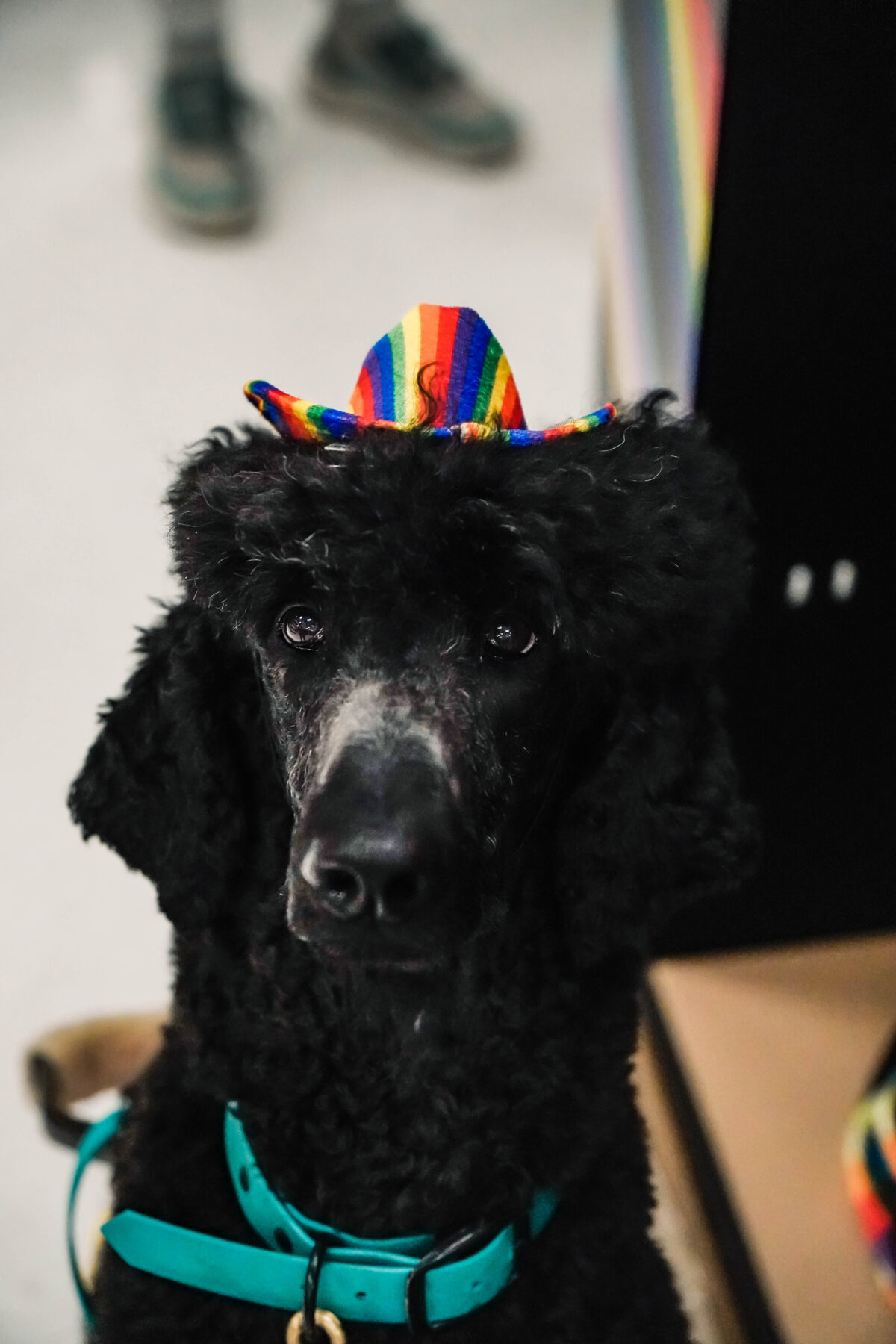
Albert, a certified black standard poodle from Sherbet Service Dogs, tries on a new hat.

Poodles are lovely. But there is a reason big schools don’t use them. 

Actually, there are several.

  • Lack of food motivation. The average poodle thinks it is gauche to eat before noon, will only eat just enough food to keep them alive, and it has to be cooked by a Michelin star chef during a full moon.

    While many will work happily for praise, many more want toys/play, and it’s hard to reward a service dog with a game of fetch when you’re in Walmart. 

  • Extremely Sensitive. In the best poodles, that sensitive ego is valuable because most poodles have good self-restraint and think before they act. However, many poodles sense the importance of service dog work and buckle under the pressure. Performance anxiety is real as many human students can attest. Dogs who freeze up when they are needed most do not make great service dogs.

    Most schools would rather train oblivious impulsive clowns who will, at least, act when there is a crisis. Retrievers fit that bill much better than most poodles do.

    Plus, if you are a big service dog school mass producing dogs, you need a kennel. And the average poodle is too sensitive to live in a kennel environment.

  • Hair Care. Poodle hair doesn’t shed, and it doesn’t stop growing. Notice that I called it hair. It is not fur. It is hair, and it needs to be treated with all of the same care that a human with 4c level curly hair must give their own hair, but with the addition of a downy undercoat to tangle it. (And yes, a poodle’s hair can be trained into dreadlocks just like human hair can.)

    What this mostly means in practice is that their fur mats up and has to be shaved. Ever wonder about those silly fancy poodle cuts? They’re practical.  The areas that are doomed to mat and/or get filthy, like the beard, toes, and… er… toileting region, are kept shaved and trim, while nice puffs can be sported on the easer to care-for spots.

    Unless you’re a master groomer, this gets expensive. Your dog needs topiary performed on them every 2-3 months. Until you can develop the chops and have the time to do it yourself, you’re going to be handing over $600-800 a year to a groomer.

    Not only can a service dog charity not afford this kind of bougie care for their dogs in training, they don’t want to pass that kind of financial responsibility onto their recipients, either.

  • Too Smart. People think service dogs have to be smart. They don’t! In fact, smart dogs are very difficult to live with. They get bored. They amuse themselves by playing tricks on you. They plot out The Perfect Kitchen Counter Heist.

    Poodles are generally very well behaved, but they have a mischievous streak which is sometimes mistaken for stubbornness. If you teach a poodle to open the door, they’ll do it when you ask… except when they think you need some livening up. Occasionally a poodle will think this is the perfect time to run circles around you because they know you will have to chase them, and poodles LOVE a good game of tag.

What About Aussies?

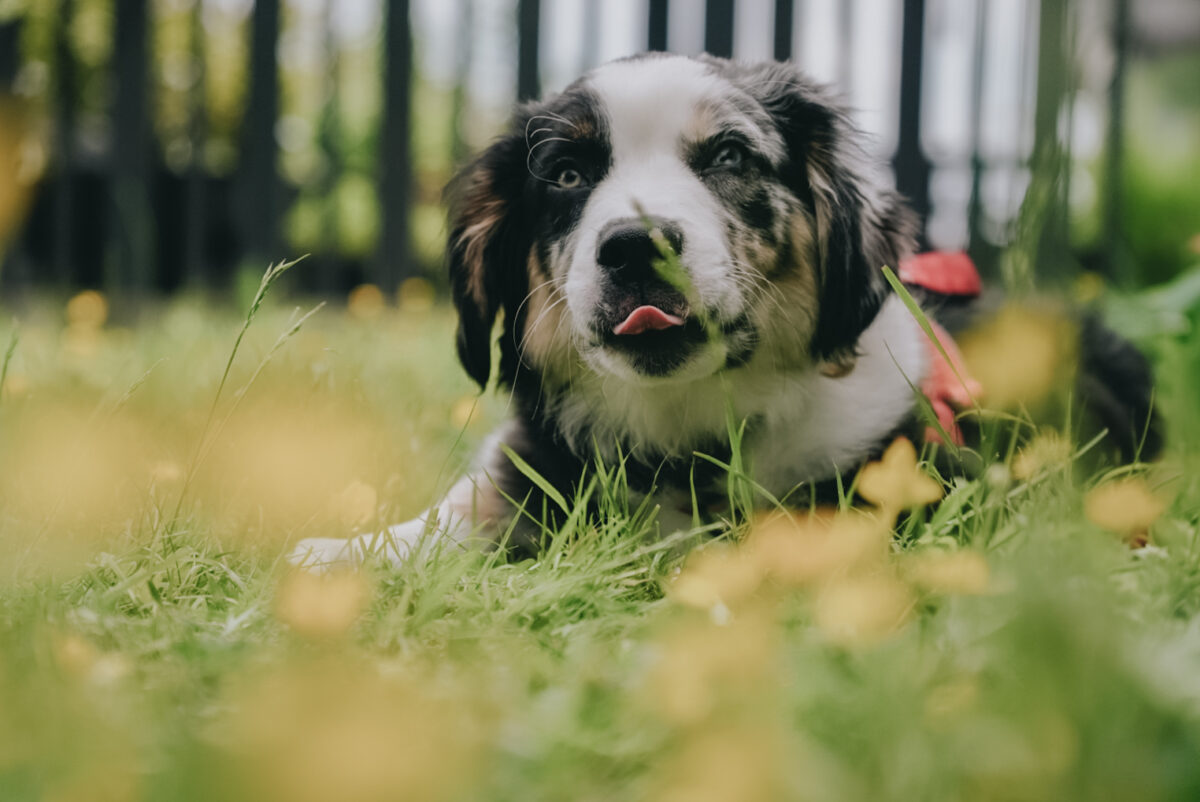
I mean, who doesn’t love that beautiful merle coat pattern that people most frequently associate with Australian Shepherds?

Plus, aussies are affectionate, not prone to aggression, intelligent, and love to work. In fact, they need a job. Plus they are sensitive and highly trainable. Perfect, right?

Then there are Corgis and their adorable heart-butts. What’s not to love?

There’s just a few problems.

  • Sound Sensitive. Herding breed dogs, like border collies and aussies, are bred to live on quiet country farms where the noisiest thing around says “baaaaa”. They must listen for the shepherd’s whistle across long distances, and hear it well enough to know exactly which direction he wants them to take with the sheep.

    But public city life is loud. So you need to look for a weirdo who barely notices sound. But they can’t be deaf, either, because that can make them jumpy and nervous.

  • Prey Drive. We all know that retrievers can get addicted to balls. But most retrievers can also sit and watch a bike go by if they know there’s a cookie in it for them. Bred to wait in the bushes until the hunter sends them to get the ducks, retrievers are usually able to inhibit their predatory urges to chase things. But herding breed dogs have had this emphasized. For many herding dogs, it is frankly impossible not to chase a moving object that has just whizzed by at close range, no matter how desperately they want to please you. 

  • Too Smart. Like poodles, herding breeds tend to get bored and restless. They don’t like lazing around under your desk all day. Without plenty to keep their brain busy they tend to develop hobbies we dislike, such as competitive barking, home remodelling (that baseboard has GOT to go), and food-stealing. 

  • Tendency to be shy. Everything listed above is not a bug – it’s a feature. We wanted them to be sound sensitive, and smart, and driven to chase things all day for no rewards beyond a gruff “that’ll do” from their shepherd. If we ask them to do a job that involves lying down, not chasing things, and ignoring noise and they hate it, well… that’s on us.

    But all breeds have faults that their fans try to weed out, and for many herding breeds, including Corgis, Aussies, and Shelties, it’s a dislike of unfamiliar people. The shyness fault can be small, such as a mild dislike of being patted by strangers, to full on shouting rude threats at people who walked into the coffee shop.

    If your aussie has this fault – and sometimes it doesn’t appear until adolescence – your dog can learn coping skills, but they just can’t help being uncomfortable with new people. And no service dog can be happy unless they are happy being around strangers every day.

But I know a poodle/aussie/corgi/retriever who…

I know. Almost everyone who reads this list will think of a golden retriever they knew who would only eat the most expensive treats, or an aussie who never even woke up when they turned on the tunes, or a poodle who was as smart as a sack of bricks.

This article is about statistics, not individuals.

We have met many extroverted aussies, food-loving poodles, and shy retrievers.

However, when you aim for a dog from a particular breed, you should know the statistics of what you’re likely to get.

Set yourself up for success. Look for a dog breed that historically has done a job similar to what you would like them to do. Don’t look at the job itself (swimming to get ducks) so much as what it entails (Sitting for long periods of time with their handler. Brief periods of vigorous activity. Ability to withstand cold and uncomfortable conditions. etc) and ask if those qualities would be useful to you.

For example, a beagle might seem like a good fit for a gluten-sniffing dog. But a beagle, once they catch the scent, never gives up. They follow it to the source. Do you want a dog to tell you about gluten, or to go looking for gluten no matter how much you call them to come back? A dog that is bred to interact with humans in a team partnership, rather than chased desperately by people on horseback who are just trying to keep up, is likely to do the job better.

Service dog schools use the dog breeds that, statistically, have led to the most frequent successes.

You would be wise to at least consider the breeds they choose, and if you choose differently, then please choose wisely.

Share This Article

From our blog to your inbox

Subscribe To New Posts

recent posts

  • A newborn puppy is held upside down in purple-gloved hands
You Won’t Believe What They Do To Newborn Puppies To Turn Them Into Service Dogs

By |January 23, 2026|Tags: , |

They called it the “Super Dog” Program.

The American Military were investigating how to raise stronger, more resilient, smarter dogs. They turned to Dr. Michael Fox, who had written the book (indeed, several books) on puppyhood brain development.

Their the protocol they developed is now used by many service […]